
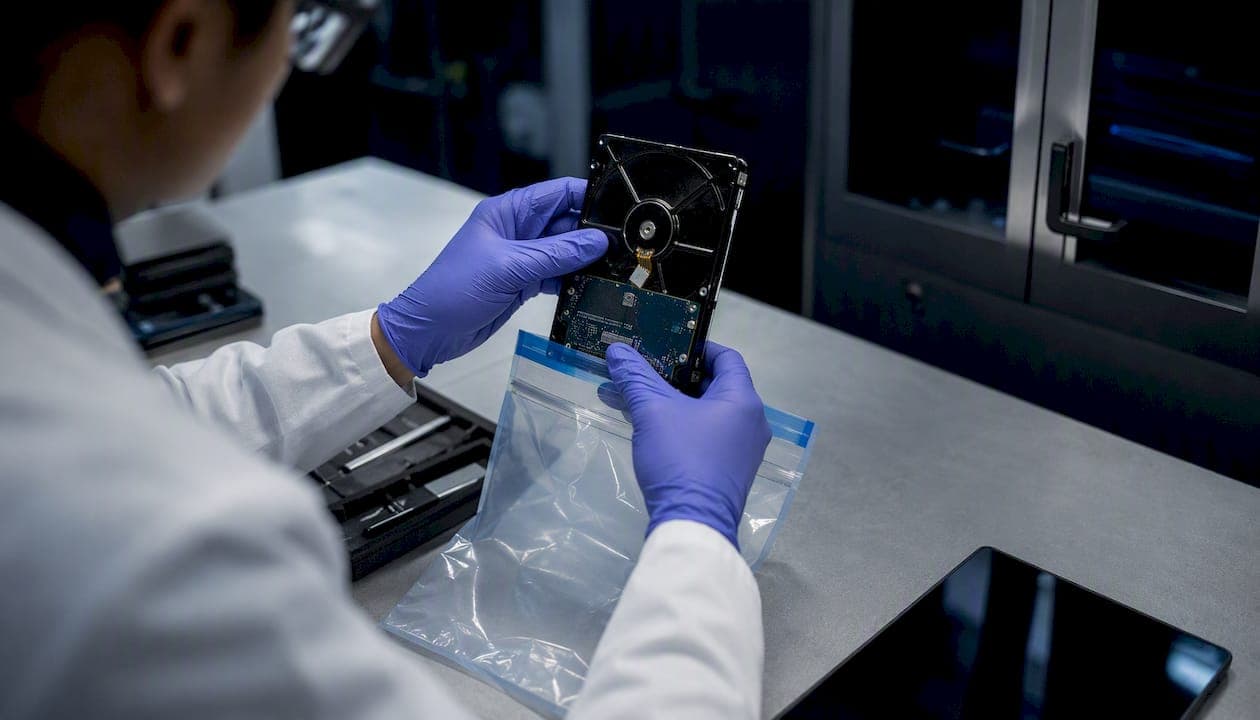
Digital forensics is the application of scientific methods to identify, collect, examine, and analyze digital evidence while preserving its integrity and maintaining a strict chain of custody, as defined by the NIST CSRC glossary. Its two primary uses are producing court-admissible evidence in criminal and civil proceedings, and reconstructing security incidents so organizations understand exactly what happened and how. Authoritative bodies including NIST, INTERPOL, and the National Software Reference Library (NSRL) have each contributed standards, reference data, and validation resources that underpin how the field operates in practice.
Key Takeaways
Digital forensics is the discipline that determines what happened, who did it, and whether the evidence will hold up, making it a foundational capability for any organization with regulatory, legal, or security obligations.
| Point | Details |
|---|---|
| Definition and scope | Digital forensics applies scientific methods to identify, collect, examine, and analyze digital evidence while preserving integrity and chain of custody. |
| Five canonical phases | Identification, preservation, examination, analysis, and reporting each have defined outputs; skipping any phase risks evidence loss or inadmissibility. |
| Legal admissibility | Defensible evidence requires validated tools (CFTT, NSRL), SHA-256 hashing, documented chain of custody, and reproducible methodology per NIST SP 800-86. |
| AI and cloud governance | Organizations without defined AI log retention and cloud audit policies face evidence gaps that cannot be reconstructed after an incident. |
| Heightscg | Heightscg provides retained incident response and forensic readiness services aligned to NIST standards for organizations in regulated sectors. |
Table of Contents
- Why digital forensics matters for your organization
- The forensic investigation process: phases, chain of custody, and what teams must do
- What are the main branches of digital forensics?
- Which tools and techniques do forensic investigators actually use?
- How digital forensics fits into DFIR and your security operations
- Legal admissibility: what makes forensic evidence defensible in court or audits
- How cloud, encryption, and AI are complicating modern forensic investigations
- When should you engage a forensic investigator, and how do you choose one?
- What security leaders should do to build lasting forensic readiness
- Heightscg brings retained forensic and incident response capability to your organization
- Primary sources and standards for forensic practice
- Sources
Why digital forensics matters for your organization
Every organization that handles sensitive data, operates under regulatory oversight, or faces litigation risk has a stake in forensic capability. NIST SP 800-86 makes the case plainly: practically every organization needs forensic capability to determine what events occurred and to satisfy due diligence and regulatory compliance obligations.
Consider three scenarios where that capability determines the outcome. In a corporate data breach, forensics establishes the attack vector, the scope of exfiltrated data, and the timeline regulators and insurers need. In an insider theft case, forensic imaging of the suspect's workstation and cloud storage produces the evidence chain that makes prosecution or civil recovery viable. In a regulatory audit, documented forensic procedures demonstrate that the organization can account for its data and access controls, which is often the difference between a warning and a material finding.
Without forensic readiness, organizations face a visibility gap: they know something went wrong but cannot prove what, when, or by whom. That gap is expensive in litigation, damaging in regulatory proceedings, and operationally paralyzing during incident response.
The forensic investigation process: phases, chain of custody, and what teams must do
NIST SP 800-86 defines four canonical phases: collection, examination, analysis, and reporting. Practitioners commonly add identification before collection and preservation as a distinct step between collection and examination. The Open University's forensic process guidance stresses that contemporaneous note-taking throughout every phase is what makes results reproducible by a second examiner, which is the standard courts and auditors apply.
Phase sequence and ownership:
- Identification — Determine what devices, accounts, logs, and data stores are in scope. Typically owned by the IR lead or legal counsel. Output: scope document and evidence inventory.
- Preservation/Acquisition — Create bit-for-bit forensic images of relevant media; capture volatile memory before powering down. Owned by a certified forensic examiner. Output: verified forensic images with hash values.
- Examination — Extract artifacts (file system metadata, registry entries, event logs, browser history) from the forensic copy. Output: structured artifact dataset.
- Analysis — Correlate artifacts to reconstruct events, attribute actions, and test hypotheses. Output: timeline and findings narrative.
- Reporting — Document methods, limitations, findings, and reproducible steps for legal teams and decision-makers. Output: forensic report suitable for court or regulatory submission.
As National University's computer forensics overview notes, analysis always runs on the forensic copy, never the original, so the source evidence remains unaltered.
Chain-of-custody checklist:
- Record who collected each item, when, and where (exact device identifiers, serial numbers, timestamps).
- Hash every image immediately after acquisition (SHA-256 minimum) and re-verify before and after each examination session.
- Store originals in a tamper-evident container with access log.
- Document every transfer of custody with signatures and timestamps.
- Maintain a continuous log of every person who accessed the evidence.
| Phase | Core actions | Primary artifacts produced |
|---|---|---|
| Identification | Scope devices, accounts, logs | Evidence inventory, scope document |
| Preservation | Forensic imaging, volatile memory capture | Verified disk images, memory dumps |
| Examination | Artifact extraction from forensic copy | File metadata, registry data, event logs |
| Analysis | Timeline reconstruction, hypothesis testing | Incident timeline, attribution findings |
| Reporting | Document methods, findings, limitations | Forensic report, expert testimony package |
Pro Tip: Volatile memory (RAM) disappears the moment a system powers down. If a live system is suspected of compromise, capture memory before imaging the disk. Tools in the memory forensics category can extract running processes, network connections, and encryption keys that would otherwise be lost permanently.
What are the main branches of digital forensics?
The digital forensics investigation field has expanded well beyond desktop computers. Each branch addresses a distinct evidence source, and most real incidents require more than one.
- Computer forensics covers workstations, servers, and storage media. Evidence sources include file systems, registry hives, event logs, and deleted file remnants. This is the most mature branch, with the widest tool support.
- Mobile device forensics addresses smartphones and tablets. Evidence includes call records, SMS/messaging app data, GPS history, and app artifacts. Logical and physical extraction methods differ significantly in what they recover.
- Network forensics analyzes packet captures, flow records, firewall logs, and DNS query logs to reconstruct communications and identify lateral movement.
- Cloud forensics is the most operationally complex branch. Evidence lives in provider-controlled infrastructure, and acquisition depends on API access, legal process, and provider cooperation. Jurisdictional issues frequently complicate timelines.
- Memory/volatile forensics focuses on RAM contents: running processes, injected code, decrypted credentials, and active network connections. Evidence is time-critical and non-persistent.
- IoT and embedded device forensics covers industrial control systems, smart devices, and embedded firmware. Extraction methods are often device-specific and may require hardware-level access.
Modern incidents rarely stay within one branch. A ransomware attack may require computer forensics on encrypted endpoints, network forensics to trace lateral movement, and cloud forensics to determine whether data was exfiltrated to an attacker-controlled storage bucket. AI systems add another layer: model logs, inference records, and training data pipelines are emerging evidence sources that few organizations currently preserve or know how to examine.
Which tools and techniques do forensic investigators actually use?
The core technique categories are disk imaging and hashing, memory analysis, timeline reconstruction, mobile extraction, and network packet capture. Each category has corresponding tool classes, and the choice of tool matters for legal defensibility.
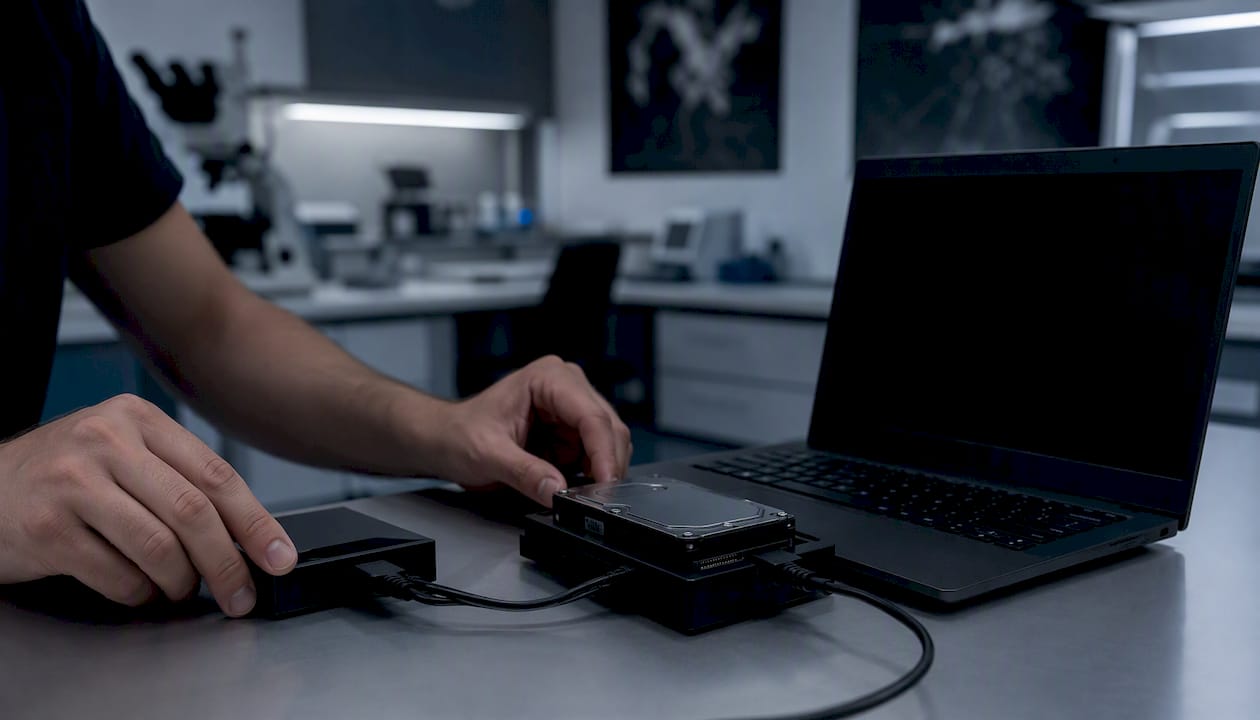
Forensic suites handle disk acquisition, file carving, artifact parsing, and timeline generation in a single platform. Memory forensics tools extract and analyze RAM contents from live systems or hibernation files. Mobile extraction platforms use both logical (app-layer) and physical (chip-level) methods to recover data from smartphones. Log and telemetry platforms aggregate SIEM data, endpoint telemetry, and cloud audit logs for correlation analysis.
Tool validation is not optional when evidence will be used in legal proceedings. The Computer Forensic Tool Testing (CFTT) program, run by NIST, provides standardized test results for forensic tools so examiners can cite validated performance characteristics. The National Software Reference Library (NSRL) supplies hash sets of known software files, allowing examiners to filter out operating system and application files and focus on user-generated or attacker-introduced content.
The NIST scientific foundation review is direct about limits: not all evidence will be found, artifact meanings shift as software evolves, and recovering deleted data can produce extraneous results that require practitioner judgment. Anti-forensics techniques, full-disk encryption, and ephemeral cloud storage all reduce what is recoverable. Practitioners treat the discipline as hypothesis-driven science: form a testable explanation for observed artifacts, use validated tools to test it, and revise if the evidence contradicts the hypothesis.
How digital forensics fits into DFIR and your security operations
Cybersecurity is proactive; digital forensics is reactive. Cybersecurity focuses on preventing and detecting threats before they cause harm. Digital forensics focuses on investigating what happened after a security event and preserving evidence of it. DFIR combines both into an end-to-end response capability: incident response handles containment and remediation while forensics handles evidence preservation and root-cause analysis.
The operational handoff looks like this:
- Detection — SOC or EDR platform alerts on anomalous behavior.
- Containment — IR team isolates affected systems to stop further damage.
- Evidence preservation — Forensic examiner images affected systems and captures volatile data before remediation alters the environment.
- Analysis — Forensic team reconstructs the attack timeline and identifies the initial access vector, lateral movement, and data impact.
- Remediation — IR team removes the threat and hardens controls, informed by forensic findings.
- Post-incident review — Findings feed back into threat detection rules, threat hunting workflows, and security control improvements.
Organizations that skip the preservation step before remediation routinely destroy the evidence they need for insurance claims, regulatory notifications, and litigation. Building forensic preservation steps into IR playbooks, not as an afterthought but as a mandatory gate before any system is wiped or reimaged, is one of the highest-value process changes a security team can make.
Legal admissibility: what makes forensic evidence defensible in court or audits
Admissibility depends on four factors: evidence integrity, validated methods, documented chain of custody, and competent reporting. A finding that cannot be reproduced by an independent examiner using the same methods is unlikely to survive challenge in court or a regulatory proceeding.
Checklist for defensible evidence handling:
- Acquire forensic images using validated tools; record tool name, version, and CFTT test results.
- Hash every image at acquisition (SHA-256) and verify the hash before each examination session.
- Document the complete chain of custody from seizure through analysis and storage.
- Use NSRL hash sets to filter known-good files and reduce examiner workload and false-positive risk.
- Follow NIST SP 800-86 procedures and reference INTERPOL guidelines for cross-border or multi-jurisdiction matters.
- Retain all working notes, tool logs, and intermediate outputs, not just the final report.
Pro Tip: A forensic report for legal teams should include: the examiner's qualifications, a description of every tool used with version and validation source, a step-by-step methodology that a second examiner could replicate, explicit statements of what was and was not examined, and a clear separation between findings (what the evidence shows) and opinions (what the examiner infers). Courts exclude reports that conflate the two.
How cloud, encryption, and AI are complicating modern forensic investigations
Modern technology has made evidence harder to find, harder to preserve, and harder to interpret. Cloud infrastructure, widespread encryption, ephemeral telemetry, and AI systems each introduce distinct complications.
Major practical challenges:
- Data volume and distribution — A single incident may involve endpoints, cloud storage, SaaS platforms, and third-party APIs across multiple jurisdictions. Coordinating legal process across providers adds weeks.
- Encryption — Full-disk encryption and end-to-end messaging encryption can make device contents inaccessible without the key. Memory forensics sometimes recovers keys from RAM, but only if the system was live at acquisition.
- Ephemeral and auto-deleted data — Cloud platforms and messaging tools with automatic deletion policies can destroy evidence before a preservation order is in place.
- Anti-forensics — Attackers increasingly use living-off-the-land techniques, log tampering, and fileless malware specifically to reduce forensic footprint.
- AI-generated content and model logs — Determining whether content was AI-generated, which model produced it, and whether inference logs were retained is now a real investigative question in fraud, intellectual property, and insider threat cases.
The NIST scientific foundation review highlights that artifact significance changes as operating systems and automated systems evolve, requiring continuous tool validation. For AI systems specifically, the governance gap is acute: most organizations deploying AI tools have not defined who owns the model logs, what retention policy applies, or how inference records would be preserved in litigation. That gap is a forensic liability. Leaders who govern AI security and logging policy now will face far lower investigation costs and regulatory exposure when an AI-related incident occurs.
When should you engage a forensic investigator, and how do you choose one?
Waiting until an incident is fully understood before calling a forensic specialist is one of the most common and costly mistakes organizations make. Evidence degrades, systems get reimaged, and logs roll over. The decision to engage should be triggered early, not late.
Severity indicators that should trigger forensic engagement:
- Confirmed or suspected data exfiltration affecting regulated data (PHI, PII, financial records).
- Ransomware deployment or destructive malware on production systems.
- Indicators of insider threat or employee misconduct with potential legal or HR consequences.
- Any incident that may trigger regulatory notification obligations (HIPAA, PCI DSS, state breach laws).
- Active litigation or credible litigation threat where digital evidence is relevant.
- Criminal activity involving company systems or data.
Provider selection criteria:
- Demonstrated experience with legal proceedings in your sector (healthcare, financial services, defense).
- Validated tool use with documented CFTT and NSRL references.
- Clear chain-of-custody procedures and documented methodology.
- Retainer availability so response begins within hours, not days.
- Ability to provide expert testimony if the matter proceeds to court or regulatory hearing.
One practical note: the cost of preserving evidence while a vendor is being contracted is almost always lower than the cost of reconstructing an investigation after remediation has destroyed artifacts. A pre-negotiated incident response retainer eliminates that delay entirely.
What security leaders should do to build lasting forensic readiness
Forensic readiness is not a one-time project. It is a governance posture that requires ownership, policy, and periodic validation.
The first executive action is assigning clear ownership. Someone in the organization must be accountable for forensic readiness, with authority over logging policy, retention schedules, and IR playbook design. Without named ownership, forensic capability degrades silently between incidents.
The second action is defining retention and logging policy with forensic use in mind. Logs that are not retained cannot be analyzed. Cloud audit logs, endpoint telemetry, identity provider records, and AI system inference logs should all have defined retention periods that account for the organization's regulatory obligations and litigation risk profile. Many organizations discover their logging gaps only after an incident, when it is too late.
The third action is investing in validated tools and an external retainer relationship. Internal teams benefit from CFTT-validated forensic tools and documented procedures. An external retainer with a qualified forensic firm provides surge capacity, legal credibility, and specialist expertise for incidents that exceed internal capability. The threat hunting and forensic insights connection is also worth formalizing: forensic findings from past incidents should feed directly into detection rules and hunting hypotheses, closing the loop between reactive investigation and proactive defense.
Heightscg brings retained forensic and incident response capability to your organization
Organizations that have experienced a serious incident know the difference between having a forensic partner on retainer and searching for one under pressure. Heightscg's incident response and forensic readiness services are designed for exactly that gap: reducing time-to-evidence, supporting legal admissibility from the first hour of response, and ensuring remediation is informed by a complete picture of what happened.

When evaluating a forensic and IR partner, consider whether they offer:
- Retainer-based engagement with defined response time commitments.
- NIST-aligned forensic procedures with documented chain-of-custody practices.
- Validated tool use referenced against CFTT and NSRL standards.
- AI and cloud logging governance expertise for modern evidence environments.
- Sector experience in regulated industries (healthcare, financial services, defense contracting).
Heightscg works with executive leadership and security teams to build forensic readiness before incidents occur and to lead investigations when they do. To discuss a forensic readiness assessment or incident response retainer, contact Heightscg directly.
Primary sources and standards for forensic practice
The most authoritative resources for digital forensics practice and validation are NIST SP 800-86, the NIST scientific foundation review, INTERPOL guidelines, the NSRL, and the CFTT program. Legal and technical teams should consult these directly, and legal counsel should be involved whenever guidance is applied in litigation or regulatory response.
| Source | What it provides | Why it matters |
|---|---|---|
| NIST SP 800-86 | Canonical forensic phases, chain-of-custody procedures, integration with IR | Primary procedural standard for US organizations; cited in regulatory and legal proceedings |
| NIST Scientific Foundation Review | Limits of digital investigation techniques, tool validation requirements | Establishes scientific basis and cautions practitioners on artifact interpretation |
| INTERPOL Digital Forensics Guidelines | International best practices for cross-border digital evidence | Essential for incidents involving foreign jurisdictions or multinational organizations |
| National Software Reference Library (NSRL) | Hash sets of known software files for evidence filtering | Reduces false positives; allows examiners to focus on user-generated and attacker content |
| Computer Forensic Tool Testing (CFTT) | Standardized test results for forensic tools | Enables examiners to cite validated tool performance in legal proceedings |
Consult qualified legal counsel before applying any of these standards in active litigation, regulatory investigations, or cross-border matters where jurisdictional rules may affect evidence handling requirements.
This article is general information, not a substitute for advice from a qualified lawyer. Consult a qualified legal professional about your own circumstances before acting on anything here.
Sources
- NIST SP 800-86, Guide to Integrating Forensic Techniques into Incident Response
- Digital Investigation Techniques: A NIST Scientific Foundation Review | NIST
- What is Computer Forensics? | National University
- digital forensics - Glossary | CSRC
- The digital forensic process - Open University
- Digital forensics in cybersecurity - Marshall University blog