

A data breach response is the organized, timed sequence of technical, legal, operational, and communications actions an organization takes after confirming unauthorized access to or disclosure of sensitive data. It is not an IT problem with a communications wrapper. It is a business crisis requiring executive authority, cross-functional coordination, and documented decision rights from the first minute.
When a breach is confirmed, the first 60–120 minutes determine whether the incident stays contained or expands into a regulatory and reputational catastrophe. Execute these steps immediately:
- Isolate affected systems without powering them down (preserve volatile memory).
- Preserve evidence: capture logs, memory images, and network traffic before any remediation action touches the environment.
- Convene the incident response team and activate the Senior Responsible Officer (SRO).
- Notify law enforcement (FBI Cyber Division) if criminal activity is suspected or if the breach involves critical infrastructure.
- Issue a communications hold: no external statements until legal review clears them.
- Identify the data types exposed to determine whether regulators such as the Federal Trade Commission, HHS Office for Civil Rights (OCR), Centers for Medicare & Medicaid Services (CMS), or state attorneys general must be notified.
Pro Tip: Volatile evidence — RAM contents, active network connections, running process lists — disappears the moment a system is rebooted or shut down. Engage a forensic specialist before any containment action that involves powering off hardware. A snapshot or memory image takes minutes and can be the difference between a defensible root-cause analysis and an unresolvable gap in the chain of custody.
Key Takeaways
Effective data breach response requires executive authority, NIST-aligned phases, pre-built notification templates, and forensic discipline executed within the first 24–72 hours to limit regulatory, legal, and operational damage.
| Point | Details |
|---|---|
| Lead with authority, not process | Designate an SRO with explicit decision rights before an incident; ambiguous authority is the most common cause of delayed response. |
| Follow the NIST life cycle | Structure response across detect, contain, assess, notify, recover, and review phases; each phase has distinct decision checkpoints and timing obligations. |
| Preserve evidence before containment | Capture volatile memory and logs before any remediation action; lost forensic evidence cannot be reconstructed and undermines root-cause analysis. |
| Meet notification deadlines | HIPAA requires individual and HHS notification within 60 days; other regulators and states have shorter windows; pre-approved templates reduce legal review time. |
| Heightscg provides managed IR capability | Heightscg offers incident response advisory, forensic coordination, and compliance-aligned breach management for organizations that need external capacity. |
Table of Contents
- What is data breach response, phase by phase?
- Who runs the response: building your incident command structure
- Notification obligations: who you must tell and when
- Preserving forensic evidence without breaking operations
- How to communicate during a breach: audiences, templates, and timing
- Restoring operations safely after a breach
- How to build, test, and maintain your incident response plan
- Executive governance: making breach response a repeatable business process
- Running after-action reviews that actually improve your controls
- The part of breach response most organizations get wrong
- Heightscg offers structured incident response for organizations that need it
- Sources
What is data breach response, phase by phase?
NIST SP 800-61r3 frames incident response as a life-cycle capability integrated into cybersecurity risk management, not a one-time event. The phases below follow that structure, with decision checkpoints executives can use to allocate resources and authority at each stage.
Detect
Detection starts with signals: anomalous authentication attempts, unexpected data egress, endpoint alerts, or a third-party notification. AI-enabled security information and event management (SIEM) platforms and extended detection and response (XDR) tools have materially reduced mean time to detect by correlating signals across endpoints, identity, and network layers simultaneously. The tradeoff is alert volume. Without tuned detection logic, AI-generated alerts produce false positives that exhaust analyst capacity and delay triage of genuine incidents. Triage priority should focus on data movement, privilege escalation, and lateral movement indicators first.
Contain
Short-term containment isolates the affected segment without shutting down business operations. Tactics include network segmentation, disabling compromised accounts, blocking malicious IP ranges, and revoking exposed API keys or tokens. Longer-term containment involves rebuilding affected systems from known-good images, rotating all credentials in the affected environment, and deploying stop-gap monitoring rules. The decision to take a production system fully offline requires SRO authorization because the operational impact may exceed the breach risk at that moment.

Assess and investigate
Scope and severity scoring drive resource allocation. Criteria to evaluate:
- Data types exposed: personal identifiable information (PII), protected health information (PHI), financial records, intellectual property, or AI training data.
- Volume: number of records or individuals affected.
- Exfiltration confirmed vs. suspected: forensic evidence of data leaving the environment versus unauthorized access without confirmed transfer.
- Attacker persistence: indicators of ongoing access versus a closed window.
- AI system involvement: if a machine learning model or AI pipeline was accessed, assess model inversion risk (the ability to reconstruct training data from model outputs) and whether proprietary model weights were exfiltrated.
Engage external forensic specialists when internal capacity cannot establish a reliable timeline or when litigation is likely.
Notify
Notification sequencing matters legally. Internal owners and the SRO are notified first. Regulators follow based on jurisdiction and data type, with timing windows that vary from 72 hours (common in privacy regulations) to 60 days (HIPAA's individual notification deadline). Affected individuals receive notice once the scope is confirmed and legal review is complete. Law enforcement is engaged in parallel when criminal activity is evident.
Recover
NIST SP 1800-29 makes a point that executives must internalize: once data confidentiality is lost, there is no guaranteed technical rollback. Recovery planning must therefore focus on mitigation and validated eradication, not on "undoing" the breach. Restore systems from clean backups, validate data integrity, reset credentials, and confirm that attacker persistence mechanisms have been removed before returning to normal operations.
Review
The after-action review begins within 72 hours of containment, while details are fresh. It feeds directly into control updates, playbook revisions, and budget requests.
Sample response timeline:
- First 24 hours: isolate, preserve evidence, convene IR team, notify law enforcement if warranted, issue internal hold statements, begin forensic triage.
- 72 hours: complete initial scope assessment, draft regulator notifications, brief executive leadership and board if material, begin credential rotation.
- 30 days: complete forensic investigation, issue all required individual and regulator notifications, complete remediation of root-cause vulnerabilities, conduct preliminary after-action review.
Pro Tip: If your environment includes AI systems, add a specific investigation step to determine whether training data, model weights, or inference logs were accessed. Model inversion attacks can reconstruct sensitive training records from a stolen model — a risk most breach playbooks still do not address explicitly.
Who runs the response: building your incident command structure
Effective data breach management depends on clear authority, not committee consensus. Ambiguous decision rights are the single most common reason responses stall at the worst possible moment.
The command structure most organizations use draws from the gold/silver/bronze model:
- Gold (Strategic): the SRO — typically the CEO, COO, or a designated executive — holds final authority on decisions with material business, legal, or reputational consequences. This includes approving public statements, authorizing operational shutdowns, and engaging regulators.
- Silver (Tactical): the Incident Commander coordinates across functions. In most organizations this is the CISO or a senior security leader. They translate strategic direction into operational tasks and manage the cross-functional team.
- Bronze (Operational): technical leads, legal counsel, HR, communications, and business unit owners execute within their domains under the Incident Commander's direction.
Core team roles:
- SRO: holds decision authority and organizational accountability.
- Incident Commander: coordinates the response and manages the timeline.
- Technical Lead: directs forensic investigation, containment, and recovery.
- Legal Counsel: advises on notification obligations, litigation risk, and privilege.
- Communications Lead: manages internal and external messaging.
- HR: handles employee-related aspects, including insider threat scenarios.
- Business Unit Owners: assess operational impact and prioritize system restoration.
For smaller organizations without a full security team, the practical answer is an external incident response retainer. A retainer gives you pre-negotiated access to forensic specialists, legal-adjacent IR counsel, and communications support without carrying that overhead year-round.
Pro Tip: Assign decision checkpoints explicitly in your plan: who approves public notification, who authorizes regulator engagement, and who can order a production system offline. Leaving these to real-time judgment under pressure produces delays and conflicting instructions.
Notification obligations: who you must tell and when
Legal and regulatory notification is where data breach management becomes a compliance obligation with hard deadlines. Missing a notification window can compound the original incident with regulatory penalties.
Key triggers and contacts:
- FTC: the FTC's business guide advises notifying law enforcement promptly when criminal activity is involved and provides model notification letters for affected individuals. The FTC also enforces breach obligations under Section 5 for organizations without sector-specific rules.
- HHS Office for Civil Rights: HIPAA-covered entities must follow HHS OCR breach notification rules, which require notifying affected individuals within 60 days of discovery and HHS within the same window. Breaches affecting 500 or more individuals in a state also require media notification.
- CMS: healthcare organizations operating under CMS oversight follow CMS breach response guidance, which outlines reporting pathways and coordination steps with HHS and OCR.
- FBI Cyber Division: engage when the breach involves ransomware, nation-state actors, or critical infrastructure. The FBI can assist with attribution and, in some cases, decryption keys.
- State attorneys general: most states have breach notification laws with their own timing windows, covered data definitions, and required notice content. Requirements vary significantly by state.
What to include in breach notices:
- A plain-language description of what happened and when.
- The categories and approximate volume of data involved.
- Steps the organization has taken to contain and remediate.
- Specific actions affected individuals should take (fraud alerts, credit freezes).
- Contact information for questions and a dedicated response line.
All external notices must clear legal review before release. Pre-approved holding statements drafted before an incident reduce the time between breach confirmation and compliant notification.
| Notification Category | Typical Trigger | Common Timing Window |
|---|---|---|
| Privacy regulators (general) | PII or sensitive data exposed | 30–72 hours (varies by jurisdiction) |
| Sector regulators (HIPAA/CMS) | PHI exposed, covered entity | 60 days from discovery |
| Law enforcement (FBI) | Criminal activity, ransomware, critical infrastructure | As soon as practicable |
| Affected individuals | Confirmed exposure of personal data | Varies: 30–60 days, state-dependent |
| State attorneys general | Resident data exposed above threshold | Varies: 30–72 hours, state-dependent |
Pro Tip: Draft your notification templates before an incident. Legal review of a template under calm conditions takes a fraction of the time it takes during a live breach. The FTC provides model letters you can adapt; build your versions around those structures and have counsel sign off in advance.
Preserving forensic evidence without breaking operations
Forensic integrity and operational continuity are not mutually exclusive, but the tension between them requires deliberate management. Decisions made in the first hour of a breach often determine whether evidence is admissible and whether root cause can be established.
Immediate evidence preservation checklist:
- Capture volatile memory (RAM) on affected systems before any reboot or shutdown.
- Preserve system and application logs in their original format; copy to write-protected or immutable storage.
- Record network traffic captures from the period surrounding the suspected breach window.
- Snapshot virtual machine states rather than shutting them down when forensic imaging is not immediately possible.
- Document configuration states of affected systems, including running processes, open network connections, and scheduled tasks.
Chain-of-custody basics:
- Log every action taken on evidence: who accessed it, when, and what was done.
- Use cryptographic hashes (SHA-256) to verify that evidence has not been altered after collection.
- Store evidence on isolated, access-controlled media separate from production systems.
- Maintain a written chain-of-custody form for any physical media or device.
The NCCoE's modular detect/respond/recover framework recommends integrating log correlation and monitoring capabilities into enterprise architecture before an incident, so that the evidence base exists when it is needed. Organizations that retain logs for 90 days or less frequently find that the breach window predates their available data.
Engage external forensic specialists when: the breach involves suspected nation-state actors, litigation is anticipated, internal teams lack forensic tooling, or the scope exceeds internal capacity to investigate within required notification windows.
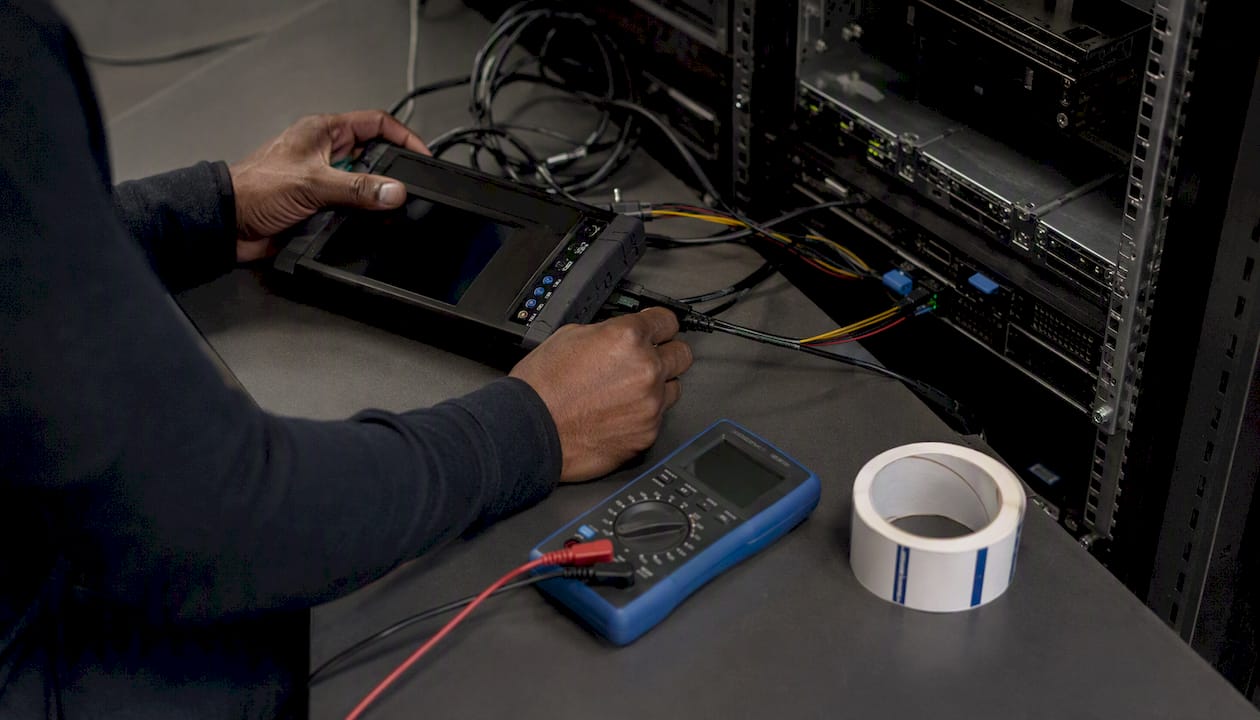
Pro Tip: Snapshot, don't shut down. A live memory image of a compromised server preserves attacker tools, encryption keys, and active connections that disappear permanently on power-off. Coordinate with your forensic team on the imaging sequence before touching anything.
How to communicate during a breach: audiences, templates, and timing
Crisis communications during a breach require the same discipline as the technical response. Uncoordinated statements create legal liability; silence creates distrust. The FTC's guidance on pre-approved holding statements reflects a principle that every communications lead should internalize: external messaging must route through legal review before release, without exception.
Audience segments and primary message objectives:
- Employees: factual update on what is known, what actions they should take (password resets, phishing vigilance), and who to contact with questions. Delivered through internal channels, not public ones.
- Customers: what happened, what data was involved, what the organization is doing, and what customers should do now. Delivered via direct notification (email, mail) and a dedicated FAQ page.
- Partners and vendors: scope of any shared data exposure, steps taken to contain, and any operational impacts on shared systems.
- Regulators: formal written notice per applicable rules, with the specific content each regulator requires.
- Media: a brief, factual holding statement that confirms the organization is aware of an incident and is investigating. No speculation on cause, scope, or attribution until confirmed.
- Investors and board: material impact assessment, legal exposure summary, and response status. Timing depends on materiality thresholds and disclosure obligations.
Recommended customer remediation steps to offer or facilitate:
- Fraud alerts through the major credit bureaus.
- Credit freezes for breaches involving Social Security numbers or financial account data.
- Identity recovery guidance via Identitytheft, which provides tailored next steps based on the type of data exposed.
- Credit monitoring services when the breach involves financial or identity data.
Social media monitoring should begin immediately after the breach becomes known internally. Assign a team member to track brand mentions, identify misinformation, and flag emerging narratives that require a response. Do not engage speculatively on social channels; direct inquiries to the official statement.
Anticipate these questions from customers and media:
- Was my data accessed or only exposed? Answer with what is confirmed; avoid speculation.
- What are you doing to prevent this from happening again? Describe specific remediation steps already underway.
- Am I at risk of identity theft? Provide concrete next steps and resources.
- Will you pay for credit monitoring? State your policy clearly and early.
Pro Tip: Warn affected individuals about secondary phishing and impersonation attacks in your notification letter. Attackers routinely use breach events to launch targeted phishing campaigns against the same population. A one-paragraph warning with specific guidance on how your organization will and will not contact them reduces victim harm and limits your liability.
Restoring operations safely after a breach
Recovery is not a return to the pre-breach state. It is a return to a validated, hardened state with confirmed eradication of attacker access. Moving too quickly risks reintroducing the same vulnerability or leaving persistence mechanisms in place.
Prioritized remediation steps:
- Credential rotation: reset all passwords and revoke all tokens and API keys in the affected environment. Prioritize privileged accounts and service accounts first.
- Patch root-cause vulnerabilities: apply patches or configuration fixes to the specific weakness the attacker exploited before bringing systems back online.
- Remove persistence mechanisms: search for backdoors, scheduled tasks, unauthorized user accounts, and modified startup scripts across all affected systems.
- Validate eradication: use threat hunting techniques to confirm no attacker foothold remains before restoring production traffic.
- Restore from clean backups: verify backup integrity before restoration; confirm backups predate the breach and were not themselves compromised.
- Harden reconfiguration: apply least-privilege access controls, enable multi-factor authentication on all restored accounts, and deploy enhanced monitoring rules tuned to the attack pattern observed.
Restoration sequencing should prioritize systems by business criticality and regulatory obligation: patient safety systems and financial transaction platforms before internal productivity tools.
Post-restoration, maintain elevated monitoring for at least 30 days. Attackers who retain any foothold will typically attempt re-entry within that window. A step-by-step data breach response guide can help IR teams sequence these actions under time pressure.
The business cost of a breach extends well beyond the technical remediation. Regulatory penalties, litigation, customer attrition, and reputational damage accumulate over months and years. Recovery planning that accounts only for system restoration underestimates the full scope of the data breach recovery process.
How to build, test, and maintain your incident response plan
A data incident response plan that has never been tested is a document, not a capability. The gap between the two becomes apparent at the worst possible time.
Required plan elements:
- SRO designation and decision authority matrix: who holds what authority at each phase.
- Playbooks by incident type: ransomware, insider threat, third-party breach, AI system compromise, and data exfiltration each require different initial actions.
- Contact rosters: internal team members, external forensic retainer, legal counsel, PR firm, and regulator contact points, updated at least quarterly.
- Escalation paths: clear criteria for escalating from technical response to executive and board notification.
- Communication templates: pre-approved holding statements, regulator notice drafts, and customer notification letters.
Exercise types and recommended frequency:
- Tabletop exercises: discussion-based scenarios with the full IR team; run at least twice per year. Evaluate decision quality, role clarity, and communication flow.
- Functional exercises: test specific capabilities (forensic collection, notification drafting) with actual tools and systems; run annually.
- Full-scale exercises: simulate a live breach end-to-end, including regulator notification drafts and media holding statements; run every 18–24 months or after a significant change.
Automation and orchestration tools (security orchestration, automation, and response platforms, or SOAR) can reduce mean time to contain by executing predefined response actions the moment a detection rule fires. The caveat for AI-driven systems: automated containment actions that affect AI pipelines or model serving infrastructure require human review before execution, because automated isolation of a model endpoint can have cascading effects on dependent business processes that are not obvious from a security alert alone.
Retest your plan after any significant change: a merger or acquisition, a cloud migration, a new AI system deployment, or a major regulatory change. Each of these alters your attack surface and your notification obligations. A practical IR plan template gives your team a structured starting point.
Pro Tip: Evaluate tabletop exercises on decision quality, not just process adherence. The most valuable output is a list of decisions the team could not make confidently — those gaps reveal where authority, information, or tooling is missing.
Executive governance: making breach response a repeatable business process
The SRO role is the single most important structural decision an organization makes about breach response. Without an executive who holds explicit authority and accountability, response decisions default to whoever is loudest in the room, which is rarely the right person at the right time.
What the SRO must hold:
- Authority to approve external communications and regulator notifications without additional sign-off chains.
- Budget authority to engage external forensic and legal resources immediately.
- Direct access to the board for material incident escalation.
- Accountability for the organization's regulatory posture post-incident.
A decision rights matrix should specify, for each major response decision, who decides, who advises, and who is informed. This is not bureaucracy. It is the mechanism that prevents a 4-hour delay while three executives debate whether to notify a regulator.
Funding and staffing the capability sustainably means treating incident response as a standing program, not a project. That includes retainer agreements with external forensic and legal specialists, annual exercise budgets, and dedicated time for the IR team to maintain and update playbooks. Integrating cybersecurity with business objectives is what converts response capability from a cost center into a demonstrable risk management asset.
Long-tail management is underestimated. Regulatory follow-through, litigation, remediation programs, and customer trust recovery extend 12–24 months beyond the technical incident. Plan for team burnout in that window; rotate personnel and bring in external support to sustain capacity.
AI governance callout: if the breach involved an AI system, executives must require answers to four questions during and after the response: What training data was accessible? Were model weights or inference logs exfiltrated? Can the model be used to reconstruct sensitive training records (model inversion)? Who owns the AI system and its associated data assets? Without designated ownership, these questions go unanswered, and the organization cannot accurately assess its regulatory exposure or remediation obligations.
Pro Tip: Assign AI system ownership in your asset register before an incident. An AI model with no named owner during a breach investigation creates the same problem as an unowned server: no one can authorize forensic access, no one knows what data it processed, and no one can assess the exposure accurately.
Running after-action reviews that actually improve your controls
The after-action review (AAR) is where the data breach recovery process converts incident findings into durable improvements. Most organizations conduct an AAR; fewer use it to drive funded, tracked remediation.
Structured AAR checklist:
- Timeline reconstruction: document every action taken, by whom, and at what time from detection through containment.
- Root cause analysis: identify the specific vulnerability, misconfiguration, or process failure that enabled the breach.
- Controls that failed: list every control that should have detected or prevented the breach and did not.
- People and process gaps: identify decisions that were delayed, roles that were unclear, and communications that were missed.
- What worked: document effective actions so they are preserved in updated playbooks.
Prioritizing fixes requires business risk scoring, not just technical severity. A vulnerability in a system that holds no sensitive data ranks lower than a process gap that delayed regulator notification by 48 hours. Link remediation items to budget cycles and roadmaps so they are funded, not just documented.
Feed lessons into training, procurement, and vendor management. If a third-party vendor's misconfiguration enabled the breach, that finding belongs in your vendor risk management program and your next contract negotiation. Track remediation closure with defined SLAs and report status to the SRO quarterly.
Re-run a tabletop exercise within 90 days of a significant incident to validate that the fixes actually work under pressure. Update external notification templates and contact rosters immediately after any AAR that reveals gaps in those areas. Reviewing examples of data breaches from comparable organizations can sharpen the AAR by surfacing failure modes your team may not have considered.
Pro Tip: Assign a named owner and a due date to every AAR finding before the meeting ends. An AAR that produces a list with no owners produces no change. The SRO should receive a closure report at 30, 60, and 90 days.
The part of breach response most organizations get wrong
The conventional framing of data breach response places the CISO at the center and treats the event as a technical problem with a communications obligation attached. That framing produces slower, less coordinated responses than organizations that treat a breach as a business crisis from the first minute.
The research and regulatory guidance are consistent on this point: NIST, the FTC, HHS, and CMS all describe breach response in terms of organizational accountability, cross-functional coordination, and documented decision authority, not just technical containment. The SRO model exists precisely because technical teams cannot authorize public statements, negotiate with regulators, or make operational shutdown decisions. Those decisions require executive authority, and they must be made in hours, not days.
Where conventional advice falls short is in the preparation gap. Most guidance tells organizations to build a plan and test it. Fewer sources are direct about what happens when the plan has never been tested under realistic pressure: the contact roster is outdated, the legal review process has no defined SLA, and the IR team discovers mid-incident that no one has authority to approve the regulator notification. Tabletop exercises expose these gaps before they become live failures.
The AI dimension adds a layer that most breach playbooks still do not address. When an AI system is involved in a breach, whether as a target, a data source, or a detection tool, the response team needs answers that standard forensic workflows were not designed to produce: what training data was accessible, whether model inversion is a realistic risk, and who owns the model and its associated data. Organizations deploying AI without governance structures are creating breach scenarios their response plans cannot handle.
The organizations that recover fastest from breaches are not those with the most sophisticated technical controls. They are the ones that made decisions quickly, communicated clearly, and had the authority structures in place to act without waiting for consensus.
Heightscg offers structured incident response for organizations that need it
When a breach occurs, the gap between having a plan and having a tested, staffed capability becomes immediately apparent. Heightscg provides incident response advisory and managed services designed for organizations in regulated industries that cannot afford to discover that gap during a live event.
Heightscg's IR capability covers the full response life cycle: forensic coordination, regulatory notification support, communications governance, and post-incident remediation aligned to NIST and sector-specific frameworks including HIPAA, CMMC, and SOC 2. For organizations without an internal IR team or a tested plan, Heightscg provides retainer-based access to specialists who can be engaged within hours of a confirmed breach. For those building internal capability, Heightscg's advisory practice delivers plan development, tabletop exercise facilitation, and SRO coaching grounded in real-world incident experience. Contact Heightscg to assess your current response readiness and determine where the gaps are before an incident forces the question.
Sources
The sources below provide primary guidance, regulatory rules, and templates for building and executing a data breach response program.
- Data Breach Response: A Guide for Business | Federal Trade Commission
- Incident Response Recommendations and Considerations for Cybersecurity Risk Management: A CSF 2.0 Community Profile
- Data Confidentiality: Detect, Respond to, and Recover from Data Breaches | NCCoE
- Hhs
- Breach Response | CMS Information Security and Privacy Program