

TL;DR:
- Cybersecurity frameworks in 2026 have evolved into operational essentials for managing risk, compliance, and board accountability. Organizations succeed by mapping controls like MFA across multiple frameworks, adopting continuous GRC practices, and integrating AI governance into their programs. Effective implementation relies on strategic planning, ownership, automation, and ongoing reviews rather than viewing frameworks as one-time projects.
Cybersecurity frameworks are defined as structured sets of standards, guidelines, and controls that organizations use to manage risk, meet regulatory obligations, and govern security operations as a measurable business discipline. The role of cybersecurity frameworks in 2026 has expanded well beyond technical checklists. Frameworks like NIST CSF 2.0, ISO 27001, SOC 2, and PCI DSS 4.0.1 now serve as the operational backbone for governance, risk, and compliance (GRC) programs that must contend with AI-driven threats, aggressive regulators, and board-level accountability demands. Organizations that treat these frameworks as living programs rather than one-time audits are the ones building durable resilience.
What are the core components of leading cybersecurity frameworks in 2026?
NIST CSF 2.0, ISO 27001, SOC 2, and PCI DSS 4.0.1 dominate cybersecurity compliance in 2026, each serving distinct but overlapping purposes. Understanding what each framework actually does is the prerequisite for selecting and implementing the right combination for your organization.

NIST CSF 2.0 is the most flexible starting point for most organizations. It organizes security activity across six core functions: Govern, Identify, Protect, Detect, Respond, and Recover. The addition of "Govern" in version 2.0 is significant. It formally places accountability at the executive and board level, not just within the IT department. NIST CSF 2.0 also extends to supply chain risk and workforce management, making it applicable to organizations facing AI and third-party risk exposure.
Here is how the major frameworks compare by primary purpose:
| Framework | Primary Purpose | Regulated Audience |
|---|---|---|
| NIST CSF 2.0 | Enterprise risk management and governance | All sectors |
| ISO 27001 | Information Security Management System (ISMS) | Global, audit-driven |
| SOC 2 | Trust Services Criteria for service organizations | SaaS, cloud providers |
| PCI DSS 4.0.1 | Payment card data protection | Retail, financial services |
| HIPAA | Protected health information security | Healthcare |
| CMMC | Defense supply chain security | DoD contractors |
- ISO 27001 requires organizations to build and maintain a formal ISMS, subject to third-party certification audits. It is the preferred framework for organizations operating across multiple jurisdictions or seeking to demonstrate security maturity to enterprise clients.
- SOC 2 is the standard most relevant to technology service providers. Its Trust Services Criteria cover security, availability, processing integrity, confidentiality, and privacy. A SOC 2 Type II report signals to customers that controls are not just designed but operating effectively over time.
- HIPAA, PCI DSS 4.0.1, and CMMC apply to specific regulated environments. Non-compliance with any of these carries immediate enforcement risk, including fines, contract loss, and operational restrictions.
Pro Tip: Start with a cyber risk assessment before selecting frameworks. Your industry, customer contracts, and existing control gaps should drive the selection, not industry trend reports.
How do organizations map multiple frameworks for efficient compliance?
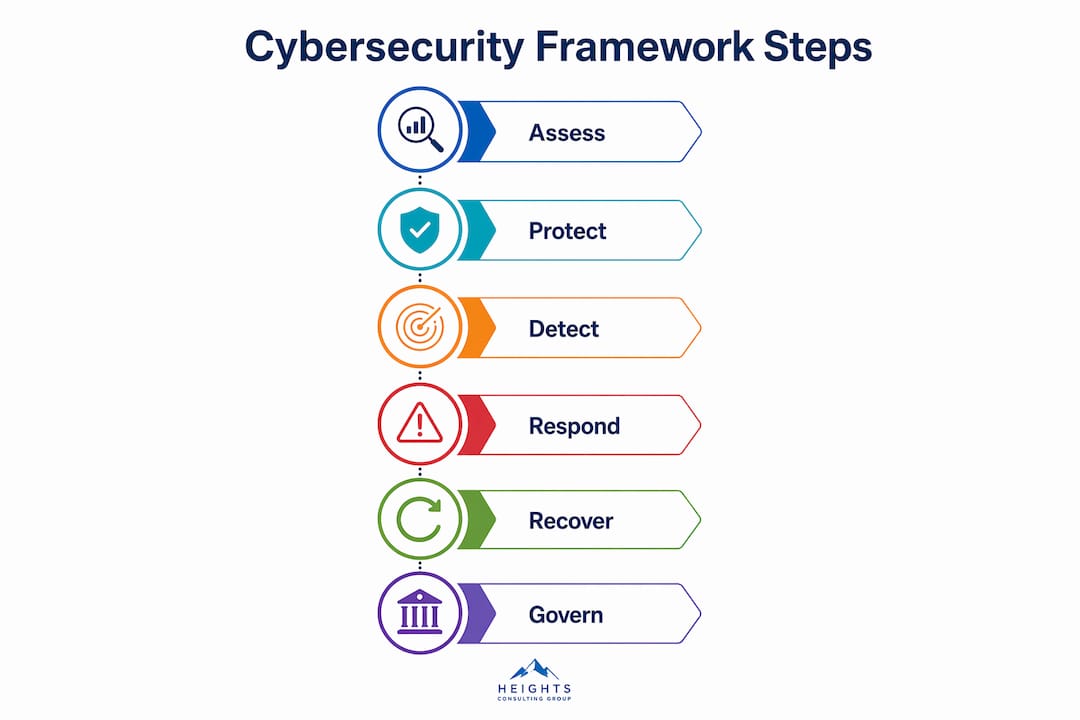
Mapping a single control like MFA across multiple frameworks reduces administrative burden and eliminates redundant audit preparation. This approach, often called a common control framework, is how mature organizations manage overlapping regulatory requirements without duplicating effort.
Consider multi-factor authentication (MFA). Implementing MFA satisfies access control requirements in NIST CSF 2.0, ISO 27001 Annex A, SOC 2 CC6.1, PCI DSS Requirement 8, and HIPAA's technical safeguard provisions simultaneously. One control, five compliance checkboxes. This is the core logic behind common control mapping, and it is why organizations that prioritize integration over siloed compliance programs achieve stronger regulatory alignment with less overhead.
The practical challenge is framework overload. Organizations in healthcare technology, for example, may face HIPAA, SOC 2, HITRUST, and state-level privacy laws concurrently. Without a deliberate mapping strategy, each audit cycle becomes a separate project consuming security team bandwidth that should be directed at actual risk reduction. The solution is to build a master control inventory, tag each control to every applicable framework, and use that inventory as the single source of truth for evidence collection.
Technology platforms like Vanta, Drata, and Tugboat Logic automate cross-framework evidence management by continuously collecting control evidence and mapping it to multiple standards. This shifts compliance from a periodic sprint to a continuous state. For managed service providers (MSPs) and MSSPs serving multiple clients, this approach is not optional. It is the only way to scale compliance operations without proportionally scaling headcount.
Selecting the right framework combination requires three inputs:
- Industry and regulatory environment (healthcare, defense, financial services, SaaS)
- Customer and partner contractual requirements (SOC 2 for enterprise SaaS clients, CMMC for DoD contracts)
- Organizational risk profile and existing control maturity
How is the shift toward continuous GRC reshaping cybersecurity governance?
GRC in 2026 is the operational foundation for organizational resilience, driven by regulations like DORA, NIS2, and the EU AI Act that explicitly require continuous, real-time risk management rather than annual audits. This shift is not incremental. It represents a fundamental change in how security governance is structured and resourced.
The transition from manual, periodic compliance to continuous GRC programs follows a recognizable pattern:
- Establish a governance charter. Define who owns cybersecurity risk at the executive level. The SEC's cybersecurity disclosure rules and NIS2 both require named accountability, not just departmental responsibility.
- Automate evidence collection. Automation tools reduce manual GRC tasks such as log review, access certification, and policy attestation, freeing analysts to focus on risk analysis rather than administrative collection.
- Integrate risk reporting into board cycles. Quarterly cybersecurity risk reports aligned to business impact metrics give boards the visibility regulators now require. DORA mandates this for financial entities operating in the EU.
- Extend governance to AI systems. The EU AI Act creates new obligations for organizations deploying high-risk AI. NIST CSF 2.0's governance function provides the structural model for assigning ownership, documenting risk, and monitoring AI-driven processes.
- Build supply chain risk management into the program. Third-party and fourth-party risk is no longer a secondary concern. NIS2 holds organizations accountable for the security posture of their critical suppliers.
Frameworks reduce operational randomness by promoting consistent patching, access controls, and incident response procedures across teams. The business value is measurable: fewer unplanned outages, faster audit cycles, and demonstrable compliance posture for regulators and customers.
Pro Tip: Treat your GRC program as a living system. Assign a control owner to every framework requirement, schedule quarterly reviews, and tie control effectiveness metrics to your cybersecurity governance reporting cadence.
How do frameworks translate technical risk into boardroom decisions?
Frameworks help translate technical vulnerabilities into business impact language, which is the prerequisite for securing executive budget and board commitment. A privilege escalation vulnerability means nothing to a CFO. The same finding framed as "an attacker could access and exfiltrate customer financial records, triggering GDPR fines and contract termination clauses" commands immediate attention.
This translation function is one of the most underutilized benefits of framework adoption. NIST CSF 2.0's governance function explicitly requires organizations to define risk tolerance and communicate it in terms the board can act on. ISO 27001's Statement of Applicability forces security teams to justify every control decision in the context of business risk. These structures create the vocabulary and accountability mechanisms that connect security operations to organizational strategy.
Effective board-level cybersecurity reporting built on framework outputs typically includes:
- Risk register summaries tied to business processes, not technical systems
- Control effectiveness metrics showing the percentage of controls operating as designed
- Regulatory exposure assessments mapping open gaps to specific compliance obligations
- Incident trend data correlated with business impact (downtime, data exposure, financial loss)
- Third-party risk status for critical vendors and supply chain dependencies
The SEC's cybersecurity disclosure rules now require public companies to disclose material cybersecurity incidents within four business days and to describe their risk management processes annually. NIS2 imposes similar obligations on critical infrastructure operators across the EU. These requirements make board-level cybersecurity literacy a legal necessity, and frameworks provide the structure to deliver it consistently.
What are the practical steps for implementing frameworks effectively?
Framework adoption fails when treated as an IT project rather than a strategic business discipline. The organizations that sustain effective programs link governance, risk, and compliance to measurable business outcomes from the start.
A phased implementation approach reduces the risk of program stall:
- Conduct a baseline risk assessment. Identify your highest-priority assets, threat vectors, and existing control gaps before selecting frameworks. This prevents over-engineering for low-risk areas while under-investing in critical exposures. A structured risk assessment process is the foundation of every effective framework program.
- Select frameworks based on regulatory and contractual requirements. Avoid adopting frameworks speculatively. If your organization holds DoD contracts, CMMC is mandatory. If you process EU personal data, GDPR applies regardless of where you are headquartered.
- Build a control inventory and assign ownership. Every control needs a named owner, a testing schedule, and documented evidence. Without ownership, controls degrade silently between audits.
- Deploy continuous monitoring tools. Security information and event management (SIEM) platforms, endpoint detection and response (EDR) tools, and automated GRC platforms provide the real-time visibility that regulators and frameworks increasingly require.
- Integrate AI governance into the framework program. AI and quantum computing risk management requires dynamic risk profiles that go beyond static controls. Document every AI system in use, assign a risk owner, and apply the same control rigor you would to any critical business system.
- Schedule continuous improvement reviews. Frameworks are not static. NIST, ISO, and PCI DSS all release updates in response to emerging threats. Build a review cycle that incorporates framework updates, new regulatory requirements, and lessons learned from incidents.
Pro Tip: Avoid the common pitfall of treating SOC 2 or ISO 27001 certification as the finish line. Certification confirms your controls were operating at a point in time. Continuous monitoring confirms they are operating right now, which is what regulators and customers actually care about.
For organizations in highly regulated sectors, the cybersecurity framework implementation guide from Heightscg provides a practical model for phased adoption aligned to business maturity.
Key takeaways
Cybersecurity frameworks in 2026 are the structural foundation for translating risk into governance, compliance into business outcomes, and technical controls into board-level accountability.
| Point | Details |
|---|---|
| Frameworks define governance structure | NIST CSF 2.0's Govern function places executive accountability at the center of every security program. |
| Common control mapping reduces overhead | Mapping one control like MFA across multiple frameworks eliminates redundant audits and saves resources. |
| Continuous GRC replaces periodic audits | DORA, NIS2, and the EU AI Act require real-time risk monitoring, not annual compliance snapshots. |
| Business translation drives board buy-in | Framing technical vulnerabilities as revenue, operational, and reputational risks secures executive commitment. |
| AI governance must be built in | NIST CSF 2.0 and the EU AI Act require organizations to assign ownership and controls to AI systems explicitly. |
Why frameworks are now a business discipline, not a security project
I have worked with organizations across defense contracting, healthcare technology, and financial services, and the pattern is consistent. The ones that struggle with cybersecurity are not the ones with the worst technology. They are the ones that treat frameworks as compliance theater rather than operational infrastructure.
What I have observed is that frameworks reduce the randomness that makes security programs fragile. When patching schedules, access reviews, and incident response procedures are documented and owned, security stops depending on individual heroics and starts functioning as a repeatable discipline. That shift is what boards and regulators are actually asking for, even when they cannot articulate it precisely.
The AI dimension changes the calculus in ways most organizations have not fully absorbed. Deploying an AI system without a named risk owner, documented controls, and a monitoring plan is the same governance failure as running a critical server without patch management. The EU AI Act makes this a legal obligation for high-risk systems. NIST CSF 2.0 provides the structural model to address it. The organizations that integrate AI governance into their existing framework programs now will avoid the remediation costs that come with reactive compliance later.
My practical advice: do not wait for a perfect framework strategy before acting. Start with your highest-risk gaps, assign ownership, and build from there. A well-executed partial program beats a perfectly designed one that never gets implemented.
— Dan
How managed cybersecurity services accelerate framework success
Implementing and sustaining multiple cybersecurity frameworks simultaneously requires continuous monitoring, evidence collection, and risk reporting that most internal security teams cannot maintain at scale without additional support.
Heightscg's managed cybersecurity services provide 24/7 protection aligned to your governance and compliance requirements, reducing manual workloads while maintaining the real-time risk visibility that DORA, NIS2, and SEC disclosure rules demand. From continuous monitoring and incident response to GRC integration and audit readiness, Heightscg positions framework adoption as an ongoing operational capability rather than a periodic project. Organizations that partner with a managed security provider gain the coverage and expertise to sustain compliance without diverting internal resources from strategic priorities.
FAQ
What are cybersecurity frameworks?
Cybersecurity frameworks are structured sets of standards, controls, and guidelines that organizations use to manage security risk, meet regulatory requirements, and govern security operations. Examples include NIST CSF 2.0, ISO 27001, SOC 2, and PCI DSS 4.0.1.
Which framework should an organization start with in 2026?
NIST CSF 2.0 is the most flexible starting point for most organizations because it applies across all sectors and scales to any maturity level. Organizations in regulated industries should layer sector-specific frameworks like HIPAA, CMMC, or PCI DSS 4.0.1 on top of that foundation.
How do multiple frameworks work together without creating redundant work?
Organizations use common control mapping to assign a single control to multiple framework requirements simultaneously. For example, implementing MFA satisfies access control requirements in NIST CSF 2.0, ISO 27001, SOC 2, and PCI DSS 4.0.1 at the same time, reducing audit overhead significantly.
How is AI changing the role of cybersecurity frameworks?
NIST CSF 2.0 and the EU AI Act now require organizations to assign ownership, document risk, and apply controls to AI systems explicitly. Integrating AI governance into existing framework programs is no longer optional for organizations deploying high-risk AI in regulated environments.
What is the biggest mistake organizations make with framework implementation?
The most common failure is treating framework adoption as a one-time compliance project rather than a continuous operational program. Certification confirms controls worked at a point in time. Sustained compliance requires continuous monitoring, ownership, and regular review cycles tied to evolving threats and regulatory updates.