

Preventing cyber attacks is no longer enough for large healthcare organizations across the United States. With ransomware incidents more than doubling from 2016 to 2021, the urgency for cyber resilience has never been greater. CISOs face mounting pressure to protect sensitive patient data and ensure uninterrupted medical services, all while meeting HIPAA standards and other regulations. This overview clarifies the real meaning of cyber resilience, the differences from conventional security approaches, and practical steps to strengthen operational defenses.
Table of Contents
- Defining Cyber Resilience and Its Misconceptions
- Key Components of Healthcare Cyber Resilience
- Cyber Resilience Strategies for HIPAA Compliance
- Incident Response and Business Continuity Essentials
- Regulatory Risks and CISO Responsibilities
Key Takeaways
| Point | Details |
|---|---|
| Understanding Cyber Resilience | Cyber resilience focuses on an organization’s ability to withstand and recover from cyber incidents, rather than solely preventing attacks. |
| Importance in Healthcare | Robust cyber resilience is vital for healthcare organizations to protect patient data, ensure service continuity, and recover quickly from disruptions. |
| Organizational Collaboration | Successful implementation of cyber resilience requires collaboration across departments and leadership engagement to maintain operations during cyber incidents. |
| Proactive Incident Response | Developing a robust incident response plan and conducting regular simulations helps organizations effectively mitigate cyber threats and maintain continuity. |
Defining Cyber Resilience and Its Misconceptions
Cyber resilience represents a comprehensive approach to managing cybersecurity risks that goes far beyond traditional defensive strategies. Unlike basic cybersecurity practices, cyber resilience focuses on an organization's ability to anticipate, withstand, recover from, and adapt to cyber incidents while maintaining critical operational capabilities. This nuanced perspective recognizes that cyber attacks are increasingly inevitable in complex digital environments.
At its core, cyber resilience involves maintaining delivery of critical services even when regular systems and mechanisms fail. Healthcare organizations specifically require robust cyber resilience frameworks that ensure patient data protection, medical service continuity, and rapid recovery from potential disruptions. The key distinction lies in understanding that resilience is not about preventing every possible attack, but developing organizational capabilities to respond effectively when breaches occur.
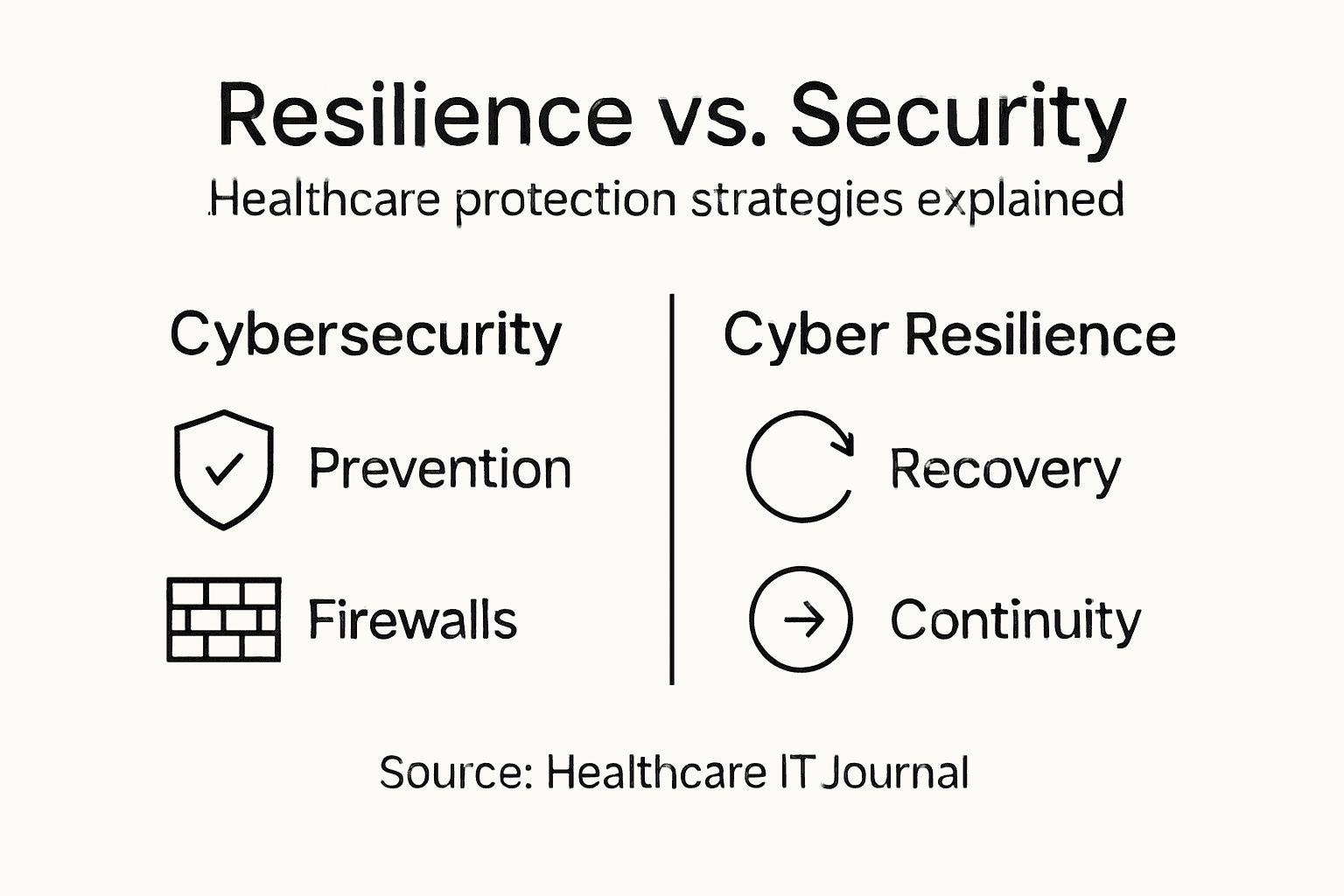
Common misconceptions about cyber resilience often stem from conflating it with traditional cybersecurity. While cybersecurity focuses primarily on prevention and protection, cyber resilience encompasses a broader strategic approach that includes preparation, detection, response, and recovery. Cyber resilience requires organizational collaboration and leadership involvement to sustain operations during potential cyber incidents. This means creating adaptive systems that can quickly identify threats, minimize damage, and restore functionality with minimal operational interruption.
Pro tip: Develop a comprehensive cyber resilience strategy that includes regular simulation exercises, cross-departmental communication protocols, and clear incident response guidelines to transform potential vulnerabilities into organizational strengths.
Here's a clear comparison between traditional cybersecurity and cyber resilience approaches in healthcare:
| Aspect | Traditional Cybersecurity | Cyber Resilience |
|---|---|---|
| Primary Focus | Threat prevention | Operational continuity |
| Response to Incidents | Reactive, post-attack | Proactive, anticipates disruptions |
| Leadership Involvement | Limited to IT roles | Requires executive engagement |
| Service Delivery | May halt during a breach | Prioritizes ongoing service |
Key Components of Healthcare Cyber Resilience
Healthcare cyber resilience requires a multifaceted approach that addresses the unique vulnerabilities of medical systems and patient data protection. Comprehensive risk management stands as the foundational component, involving continuous assessment of potential cyber threats specific to healthcare environments. Organizations must develop sophisticated strategies that go beyond traditional security measures, recognizing the complex interconnectedness of medical technologies, electronic health records, and patient care systems.
The core components of an effective healthcare cyber resilience framework include robust data protection mechanisms, rapid incident detection, and strategic response protocols. Ransomware attacks on healthcare systems have more than doubled from 2016 to 2021, underscoring the critical need for advanced defensive strategies. These components must specifically address three crucial dimensions: confidentiality of patient information, integrity of medical data, and continuous availability of critical healthcare services.
Successful cyber resilience in healthcare requires a holistic approach that integrates technological solutions with organizational culture. Key technical components include advanced threat monitoring systems, encrypted communication channels, regular security audits, and comprehensive backup and recovery infrastructure. Equally important are human factors such as ongoing staff training, clear incident response protocols, and creating a culture of security awareness that empowers healthcare professionals to recognize and respond to potential cyber threats proactively.
Pro tip: Implement a continuous learning program that combines technical cybersecurity training with scenario-based simulations to help healthcare staff develop adaptive response skills and maintain organizational cyber resilience.
This table summarizes key technical and organizational components essential for healthcare cyber resilience:
| Component | Description | Business Benefit |
|---|---|---|
| Threat Monitoring Systems | Detect anomalies in real time | Faster threat identification |
| Encrypted Communication | Protect sensitive messages and records | Greater patient data security |
| Backup Infrastructure | Maintain duplicate data and systems | Rapid recovery after cyber events |
| Staff Training Programs | Teach adaptive incident response | Reduced human error risk |
Cyber Resilience Strategies for HIPAA Compliance
Navigating HIPAA compliance requires a sophisticated approach to cyber resilience that goes beyond traditional security measures. Electronic protected health information (ePHI) demands robust protection strategies that address the complex regulatory landscape of healthcare data security. Organizations must develop comprehensive frameworks that not only prevent potential breaches but also ensure rapid detection, response, and recovery capabilities when incidents occur.
HIPAA Security Rule requirements provide a critical roadmap for implementing effective cyber resilience strategies. These strategies encompass multiple critical dimensions, including system hardening, vulnerability management, and continuous risk assessment. Healthcare organizations must focus on three primary safeguard categories: administrative, physical, and technical controls that protect patient data integrity, confidentiality, and availability. This holistic approach requires implementing security baselines, applying timely patches, and maintaining comprehensive medical device cybersecurity protocols.
Successful HIPAA compliance through cyber resilience demands a dynamic, adaptive approach that integrates technological solutions with organizational culture. Key strategies include developing detailed incident response plans, conducting regular security risk assessments, and creating ongoing staff training programs. The NIST Cybersecurity Framework crosswalk offers healthcare organizations a structured method for identifying and addressing potential security gaps, ensuring a systematic approach to maintaining compliance and protecting sensitive patient information.
Pro tip: Conduct quarterly tabletop exercises that simulate complex cybersecurity scenarios to test your organization's incident response capabilities and identify potential vulnerabilities before they become critical risks.
Incident Response and Business Continuity Essentials
Healthcare organizations must develop robust incident response and business continuity strategies that go beyond traditional reactive approaches. Cyber resilience demands a proactive framework that anticipates potential disruptions, ensures rapid recovery, and maintains critical patient care services during and after cybersecurity incidents. The fundamental goal is to create an adaptive system that can quickly detect, respond to, and mitigate potential threats while preserving operational integrity.

Incident response follows a structured four-phase lifecycle designed to minimize operational disruption and protect sensitive healthcare infrastructure. These phases include preparation, detection and analysis, containment and recovery, and post-incident activities. Healthcare leaders must implement comprehensive strategies that address technological, human, and procedural dimensions of cybersecurity incidents, ensuring that critical medical services remain uninterrupted even during potential system compromises.
Business continuity planning requires a holistic approach that identifies and prioritizes critical healthcare services. Clinical practices must develop actionable continuity strategies that protect patient care and organizational resilience. This involves creating detailed response protocols, establishing redundant communication channels, maintaining backup systems, and conducting regular simulation exercises to test and refine incident response capabilities. Successful strategies integrate advanced technological solutions with comprehensive staff training, ensuring that healthcare professionals can effectively navigate and mitigate potential cybersecurity challenges.
Pro tip: Develop a dynamic incident response playbook that includes specific scenarios for different types of cybersecurity threats, with clear role assignments and decision-making protocols to enable swift, coordinated action.
Regulatory Risks and CISO Responsibilities
In the complex landscape of healthcare cybersecurity, Chief Information Security Officers (CISOs) play a critical role in navigating regulatory risks and protecting organizational integrity. The expanding threat landscape demands a strategic approach that goes beyond traditional technical controls, requiring comprehensive risk management and proactive governance frameworks that align with evolving regulatory expectations.
Effective cybersecurity governance demands board-level oversight and senior leadership accountability. CISOs must transform complex cyber risks into clear, actionable insights that resonate with executive leadership, translating technical vulnerabilities into strategic business risks. This involves developing sophisticated communication strategies that bridge the gap between technical complexities and strategic decision-making, ensuring that cyber risks are understood and appropriately prioritized.
Regulatory compliance in healthcare cybersecurity requires a multifaceted approach that integrates technical safeguards, organizational processes, and continuous risk assessment. CISOs must maintain an adaptive framework that anticipates emerging regulatory requirements, implements robust control mechanisms, and demonstrates ongoing diligence in protecting sensitive patient information. This includes developing comprehensive incident response plans, conducting regular risk assessments, maintaining detailed documentation, and ensuring transparent reporting mechanisms that satisfy regulatory scrutiny.
Pro tip: Create a dynamic risk dashboard that translates technical metrics into business-oriented risk indicators, enabling clear communication of cybersecurity posture to board members and senior executives.
Strengthen Your Healthcare Cyber Resilience with Expert Guidance
The challenges highlighted in the article emphasize the need for healthcare organizations to develop robust cyber resilience strategies that ensure continuous protection of patient data and uninterrupted clinical services. With rising ransomware attacks and complex regulatory demands such as HIPAA, healthcare leaders face the urgent task of implementing adaptive frameworks that combine technology, staff training, and incident response planning. You deserve a partner who understands how to align these cybersecurity imperatives with your organization's broader business goals.
Heights Consulting Group specializes in elevating healthcare cybersecurity from a technical hurdle to a strategic advantage through comprehensive services. Our expertise covers managed cybersecurity, incident response, advanced threat detection, and compliance frameworks tailored to healthcare’s unique regulatory landscape. Discover how proactive monitoring and adaptive, business-aligned solutions can reduce risk and help you maintain critical operations during cyber incidents.

Don’t wait for a breach to disrupt patient care. Explore how our seasoned experts at Heights Consulting Group offer strategic advisory and technical implementation services that transform your cyber resilience posture. Visit us now to learn more about our managed cybersecurity and incident response solutions designed with healthcare in mind and take the first step toward safeguarding your organization.
Frequently Asked Questions
What is cyber resilience in healthcare?
Cyber resilience in healthcare refers to an organization’s ability to anticipate, withstand, recover from, and adapt to cyber incidents while maintaining critical operational capabilities. It goes beyond traditional cybersecurity practices by focusing on the ability to maintain service delivery even during a breach.
How is cyber resilience different from traditional cybersecurity?
While traditional cybersecurity primarily focuses on prevention and protection from attacks, cyber resilience encompasses a broader strategic approach, including preparation, detection, response, and recovery from cyber incidents to ensure operational continuity.
Why is cyber resilience important in the healthcare sector?
Cyber resilience is vital in healthcare to protect sensitive patient data, ensure continuity of medical services, and rapidly recover from cyber disruptions. Given the rise in cyber attacks, a robust cyber resilience framework helps healthcare organizations mitigate risks effectively.
What are key components of a healthcare cyber resilience strategy?
Key components include comprehensive risk management, robust data protection mechanisms, rapid incident detection, strategic response protocols, ongoing staff training, and a culture of security awareness that empowers healthcare professionals to respond effectively to threats.