

Every healthcare leader in the United States faces rising pressure to stay ahead of fast-evolving cyber threats that impact patient care and organizational stability. Cybersecurity is now a business challenge that demands decisive leadership, not just technical oversight. This article unpacks how effective cybersecurity leadership equips executives to shape culture, build resilience, and meet compliance, offering actionable strategies for safeguarding healthcare organizations against sophisticated attacks.
Table of Contents
- Defining Leadership's Role In Cyber Risk
- Core Cyber Threats Facing Healthcare Leaders
- How Leadership Shapes Security Strategy
- Compliance, Legal Duties, And C-Suite Accountability
- Building A Culture Of Resilience And Response
- Avoiding Common Leadership Failures In Cyber Risk
Key Takeaways
| Point | Details |
|---|---|
| Leadership in Cybersecurity | Cybersecurity leaders must adopt a strategic approach, integrating security into business objectives to enhance organizational resilience. |
| Proactive Risk Management | Organizations should focus on early threat detection and transparent communication to minimize breach impacts and build stakeholder trust. |
| Culture of Cyber Awareness | Building a culture that prioritizes continuous learning and collective responsibility ensures all employees understand their role in cybersecurity. |
| C-Suite Accountability | Executives must actively engage in cybersecurity governance, bridging technical risks with strategic business decisions to safeguard organizational assets. |
Defining Leadership's Role in Cyber Risk
Cybersecurity leadership transcends traditional technical management, representing a strategic imperative for organizational resilience. Modern leaders must recognize that cyber risk is fundamentally a business challenge requiring comprehensive, proactive approaches.
Effective cybersecurity leadership involves several critical dimensions:
- Establishing a robust security culture
- Developing strategic risk management frameworks
- Aligning cybersecurity objectives with business goals
- Promoting continuous learning and adaptation
Leaders play a pivotal role in anticipating emerging cyber threats by cultivating organizational awareness and preparedness. This requires understanding technological landscapes, potential vulnerabilities, and developing adaptive strategies that protect critical business assets.
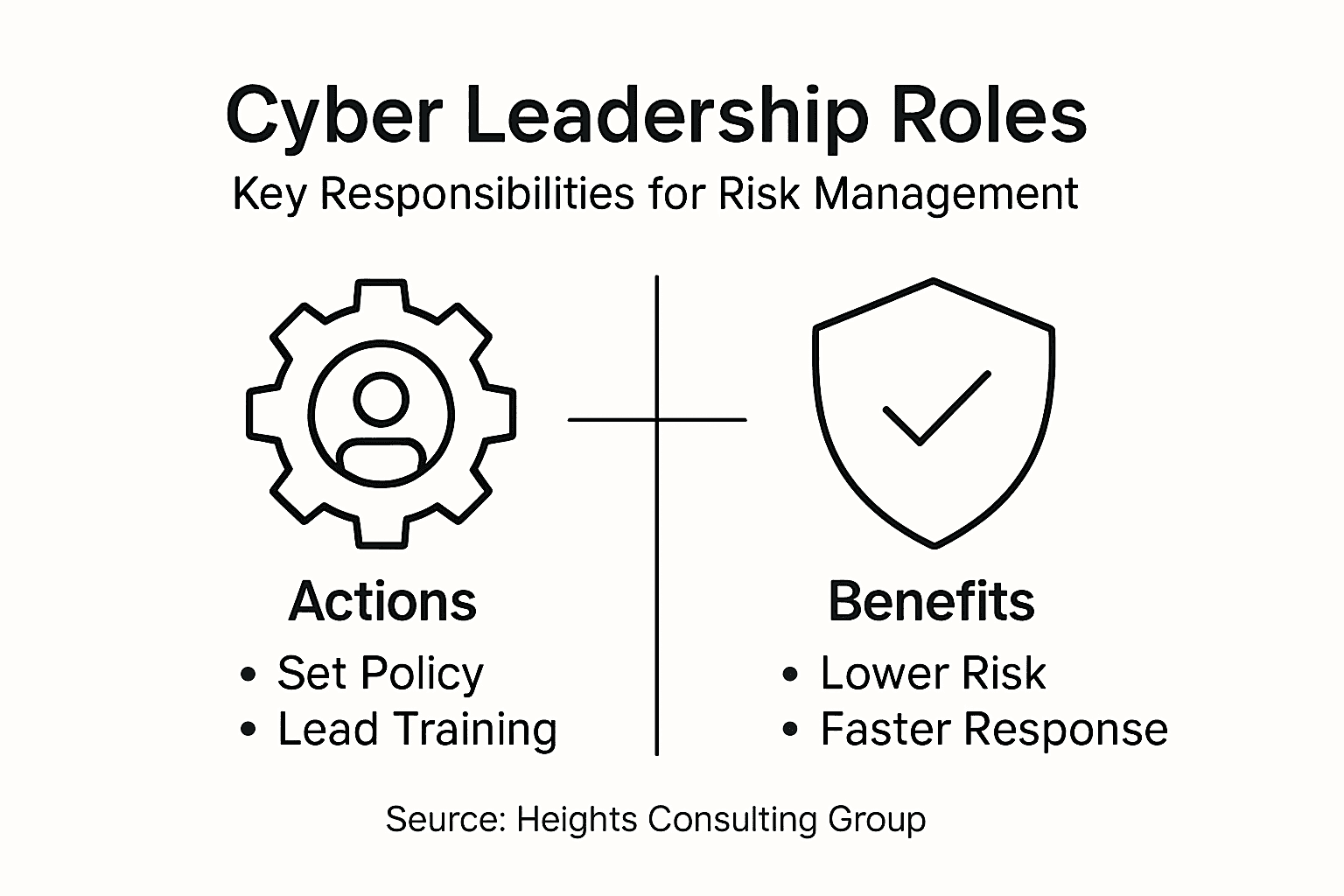
Successful cyber risk leadership demands more than operational oversight. Leaders must shape organizational mindsets, making cybersecurity a shared responsibility across all departments. This involves creating transparent communication channels, implementing comprehensive training programs, and establishing clear accountability metrics.
Cybersecurity leadership is about transforming technical constraints into strategic opportunities that enhance organizational resilience and competitive advantage.
Pro tip: Conduct quarterly leadership workshops focused specifically on emerging cyber risks and strategic mitigation techniques to maintain organizational readiness.
Below is a summary of how leadership actions influence different aspects of organizational cyber resilience:
| Leadership Action | Direct Outcome | Long-Term Business Benefit |
|---|---|---|
| Proactive risk identification | Early threat detection | Fewer costly breaches |
| Transparent communication | Faster incident response | Improved stakeholder trust |
| Continuous education | Up-to-date staff skills | Stronger overall security posture |
| Governance integration | Consistent policy execution | Sustained regulatory compliance |
| Cross-departmental collaboration | Holistic risk awareness | More effective response coordination |
Core Cyber Threats Facing Healthcare Leaders
Healthcare organizations face an increasingly complex and dangerous cybersecurity landscape that demands sophisticated and strategic defense mechanisms. Emerging cyber threats continue to target healthcare infrastructure with unprecedented sophistication and potential for widespread disruption.
The primary cyber threats confronting healthcare leaders include:
- Ransomware attacks targeting patient care systems
- Social engineering and phishing campaigns
- Protected Health Information (PHI) data breaches
- Third-party vendor security vulnerabilities
- Nation-state sponsored cyber espionage
- AI-enhanced attack methodologies
Healthcare cybersecurity requires a multilayered approach to address these complex challenges. Ransomware groups have evolved their tactics, often collaborating with sophisticated threat actors to maximize potential damage and financial gain. These attacks can potentially compromise entire hospital networks, interrupt critical patient care services, and expose sensitive medical records.
Supply chain vulnerabilities represent another significant risk vector for healthcare organizations. Cybercriminals increasingly exploit interconnected technology ecosystems, targeting smaller vendors with weaker security protocols to gain access to larger healthcare networks. This approach allows attackers to bypass traditional security perimeters and infiltrate mission-critical systems.
Cybersecurity in healthcare is no longer just an IT problem—it's a strategic imperative that directly impacts patient safety, operational continuity, and organizational reputation.
Pro tip: Develop a comprehensive incident response plan that includes specific playbooks for different types of cyber threats, ensuring rapid and coordinated organizational action during potential security breaches.
This table outlines main healthcare cyber threats and effective leadership strategies for mitigation:
| Cyber Threat | Leadership Mitigation Strategy | Organizational Advantage |
|---|---|---|
| Ransomware | Invest in offline backups; test recovery | Minimized patient care disruption |
| Phishing | Mandate advanced simulation training | Reduced risk of credential leaks |
| Vendor risk | Enforce third-party assessments | Safer supply chain integration |
| AI-based attacks | Foster real-time threat intelligence | Greater adaptive response speed |
How Leadership Shapes Security Strategy
Cybersecurity strategy is fundamentally a leadership challenge that extends far beyond technical implementation. Strategic security planning requires bridging technical expertise with executive vision, transforming cybersecurity from a cost center to a strategic business enabler.
Effective leadership in security strategy involves several critical dimensions:
- Aligning security initiatives with business objectives
- Developing comprehensive risk management frameworks
- Creating a culture of cybersecurity awareness
- Promoting cross-departmental collaboration
- Driving continuous learning and adaptation
Successful leaders understand that cybersecurity is not a siloed technical function but an enterprise-wide strategic imperative. They must translate complex technical risks into business language, helping executives understand the potential financial and reputational impacts of cyber vulnerabilities. This requires developing clear communication channels, establishing metrics that demonstrate security's value, and creating governance structures that integrate security considerations into every strategic decision.
Modern cybersecurity leadership demands a proactive and holistic approach. Instead of reacting to threats, leaders must anticipate potential risks, build resilient systems, and create adaptive strategies that can evolve with changing technological landscapes. This involves continuous investment in talent development, technology modernization, and building organizational capabilities that can withstand increasingly sophisticated cyber threats.
Cybersecurity leadership is about transforming technical constraints into strategic opportunities that protect and enhance organizational capabilities.
Pro tip: Implement quarterly cross-functional cybersecurity strategy sessions that bring together IT, business leaders, and risk management to ensure comprehensive and aligned security approaches.

Compliance, Legal Duties, and C-Suite Accountability
Corporate governance frameworks now require executives to treat cybersecurity as a critical strategic responsibility, extending far beyond traditional compliance checkboxes. Modern C-suite leaders must proactively manage cyber risks as fundamental business imperatives that directly impact organizational resilience and stakeholder trust.
Key legal and compliance responsibilities for executives include:
- Proactive risk disclosure and transparent reporting
- Establishing comprehensive incident response protocols
- Maintaining robust cybersecurity governance structures
- Implementing strategic risk mitigation frameworks
- Ensuring continuous regulatory compliance monitoring
- Protecting critical organizational assets and data
C-suite executives carry significant legal obligations that demand a holistic understanding of cybersecurity risks. They must bridge technical complexity with strategic decision-making, translating potential cyber vulnerabilities into clear business language. This requires developing deep collaborative relationships with security teams, understanding detailed risk assessments, and making informed investments in technological and human capabilities that strengthen organizational cyber defenses.
Board-level accountability has dramatically transformed in recent years, with cybersecurity emerging as a core governance priority. Executives can no longer delegate cyber risk management entirely to technical teams but must actively engage in strategic oversight, asking critical questions about threat landscapes, resilience strategies, and potential financial and reputational implications of cyber incidents.
Cybersecurity is not just an IT problem—it's a strategic business imperative that demands active leadership engagement and comprehensive organizational commitment.
Pro tip: Conduct annual cybersecurity leadership training that provides executives with practical insights into emerging threat landscapes and strategic risk management approaches.
Building a Culture of Resilience and Response
Cyber resilience demands a fundamental shift from reactive defense to proactive organizational adaptation, transforming cybersecurity from a technical constraint into a strategic organizational capability. Leaders must recognize that cyber incidents are increasingly inevitable, requiring comprehensive strategies that enable rapid response and continuous learning.
Key elements of building a resilient cybersecurity culture include:
- Normalizing open communication about cyber risks
- Promoting continuous learning and skill development
- Establishing clear incident response protocols
- Encouraging cross-departmental collaboration
- Developing adaptive threat assessment mechanisms
- Creating psychological safety for reporting vulnerabilities
Successful cyber resilience requires breaking down traditional organizational silos and creating an environment where every employee understands their role in maintaining security. This means developing comprehensive training programs that go beyond technical skills, focusing on creating a shared understanding of cyber risks and collective responsibility for organizational defense.
Leadership plays a critical role in embedding resilience throughout the organizational culture. Executives must model behaviors that prioritize transparency, continuous learning, and adaptability. This involves creating feedback mechanisms that allow teams to discuss potential vulnerabilities without fear of retribution, investing in ongoing education, and treating cyber incidents as opportunities for organizational growth and improvement.
Cyber resilience is not about preventing every possible threat, but about building organizational capabilities that can effectively detect, respond to, and recover from cyber incidents.
Pro tip: Implement quarterly tabletop cybersecurity simulation exercises that engage employees across all departments to test and improve organizational resilience.
Avoiding Common Leadership Failures in Cyber Risk
Leadership failures in cybersecurity often stem from fundamental misunderstandings of organizational risk dynamics, creating vulnerabilities that can compromise entire organizational ecosystems. Recognizing and addressing these potential shortcomings is crucial for developing robust cyber risk management strategies.
Common leadership failures in cybersecurity include:
- Underestimating insider threat risks
- Neglecting continuous cybersecurity education
- Treating security as purely a technical problem
- Failing to establish clear incident response protocols
- Avoiding transparent communication about vulnerabilities
- Overlooking the human element in cybersecurity
Successful cyber risk leadership requires moving beyond traditional reactive approaches. Executives must develop a comprehensive understanding of technological vulnerabilities, organizational culture, and the intricate human factors that contribute to cybersecurity challenges. This means creating environments that encourage open communication, continuous learning, and proactive risk identification across all organizational levels.
Boards and executive teams frequently fail by maintaining outdated perspectives on cybersecurity. They often view security as a technical constraint rather than a strategic business imperative. Effective leaders must challenge these misconceptions, invest in ongoing education, and create governance frameworks that integrate cybersecurity considerations into every strategic decision.
Cyber risk management is not about eliminating all risks, but about developing organizational capabilities to anticipate, respond to, and recover from potential threats.
Pro tip: Conduct annual comprehensive cybersecurity leadership assessments that evaluate both technical capabilities and strategic risk management approaches.
Empower Your Leadership to Master Cyber Risk Management
The article highlights how critical strong leadership is in transforming cybersecurity from a technical challenge into a strategic business advantage. If you are grappling with aligning cyber risk management to organizational goals or struggling to foster a culture of resilience and compliance, you are not alone. Key challenges like developing proactive incident response protocols, integrating cybersecurity governance, and ensuring continuous education can overwhelm even experienced leaders.
At Heights Consulting Group, we specialize in bridging the gap between executive vision and effective cybersecurity strategy. Our services include comprehensive risk management frameworks, compliance solutions aligned with NIST and SOC 2, and incident response expertise tailored to help leaders anticipate threats and safeguard business continuity. By partnering with us, you gain a strategic ally who empowers your C-suite to meet evolving cyber risks head on while embedding resilience organization-wide.

Take control of your cyber risk leadership today by exploring how we integrate cybersecurity within your business objectives and regulatory demands. Visit Heights Consulting Group to learn more about our strategic advisory and technical services. Ready for a tailored consultation on elevating your organization’s cyber governance and response capabilities Start the conversation now at Heights Consulting Group and turn leadership challenges into competitive advantage.
Frequently Asked Questions
What is the role of leadership in cybersecurity?
Leadership plays a critical role in cybersecurity by establishing a robust security culture, developing strategic risk management frameworks, and aligning cybersecurity objectives with business goals. Leaders must create transparent communication channels and take an active role in cybersecurity training and incident response preparedness.
How can leaders effectively communicate cyber risks to their teams?
Leaders can effectively communicate cyber risks by translating complex technical information into clear business language, creating an environment of open dialogue about potential vulnerabilities, and ensuring that all employees understand their role in maintaining cybersecurity.
What are some common leadership failures in cyber risk management?
Common leadership failures include underestimating insider threats, neglecting continuous cybersecurity education, viewing security solely as a technical issue, and failing to establish clear incident response protocols. It is important for leaders to proactively understand and address these risks.
How can organizations build a culture of cyber resilience?
Organizations can build a culture of cyber resilience by promoting continuous learning, encouraging cross-departmental collaboration, establishing clear incident response protocols, and normalizing discussions about cyber risks. This involves creating a shared understanding of cybersecurity responsibilities across all levels of the organization.
Recommended
- Boardroom Cybersecurity: Heights CG's Strategic Governance
- Cybersecurity for Senior Leaders: Governance & Training
- Resilient Cybersecurity Programs: Strategy & Risk | Heights CS
- Risk Management: Driving Business Resilience and Security
- Insurance Risk Management Explained: Best Practices - Digital Insurance Platform | IBSuite Insurance Software | Modern Insurance System
- 7 Essential Risk Management Tips for Tech Leaders