

Securing patient information and medical infrastructure demands more than traditional IT defenses. For CISOs in American healthcare organizations, evolving threats and complex compliance requirements create unique challenges. As regulations like the HIPAA Security Rule strengthen expectations, a comprehensive cybersecurity strategy offers not just protection but operational resilience. This article clarifies how effective integration, frameworks, and strategic alignment drive both compliance and enduring risk management across the highly regulated healthcare sector.
Table of Contents
- Defining Cybersecurity Strategy In Healthcare
- Types And Frameworks Shaping Integration
- Core Features Of Strategic Cybersecurity Alignment
- Regulatory Imperatives For Healthcare Leaders
- Operational Benefits And Competitive Advantages
- Risks Of Insufficient Cybersecurity Integration
Key Takeaways
| Point | Details |
|---|---|
| Comprehensive Cybersecurity Strategy | Implement a multifaceted approach to protect sensitive patient data and meet regulatory requirements. |
| Framework Integration | Utilize frameworks like NIST, HIPAA, and ISO to enhance security measures and address complex threats. |
| Continuous Risk Assessment | Conduct regular risk evaluations to adapt cybersecurity strategies to emerging technological challenges. |
| Operational Benefits | Leverage cybersecurity as a strategic advantage to improve patient trust and organizational resilience. |
Defining cybersecurity strategy in healthcare
A cybersecurity strategy in healthcare represents a comprehensive, systematic approach to protecting sensitive patient data, medical infrastructure, and digital health systems from evolving cyber threats. Unlike traditional IT security models, healthcare cybersecurity requires specialized frameworks that balance patient privacy, regulatory compliance, and technological resilience.
The core objective of a healthcare cybersecurity strategy involves three critical dimensions:
- Protecting Patient Data: Safeguarding electronic health records, personal identification information, and medical histories
- Ensuring Operational Continuity: Maintaining uninterrupted medical services during potential cyber incidents
- Maintaining Regulatory Compliance: Meeting stringent HIPAA security requirements
Successful cybersecurity strategies in healthcare must integrate multiple layers of protection. The NIST Cybersecurity Framework provides an adaptable approach that allows healthcare organizations to develop tailored security protocols aligned with their specific technological infrastructure and risk profile.
Healthcare cybersecurity strategies typically encompass several key implementation domains:
- Risk Assessment and Management
- Access Control and Authentication
- Network Segmentation
- Continuous Monitoring
- Incident Response Planning
Effective cybersecurity strategies transform security from a compliance checkbox into a proactive organizational capability.
Pro tip: Conduct regular cybersecurity risk assessments and update your strategy at least annually to address emerging technological threats and regulatory changes.
Types and frameworks shaping integration
Healthcare cybersecurity integration relies on multiple sophisticated frameworks that provide structured approaches to managing digital risks. Comprehensive cybersecurity frameworks enable organizations to systematically address vulnerabilities, protect patient data, and maintain operational resilience across complex technological ecosystems.
The primary types of cybersecurity integration frameworks in healthcare include:
- NIST Cybersecurity Framework: A flexible model supporting risk management and strategic planning
- HIPAA Security Rule: Establishing mandatory protection standards for electronic health information
- ISO 27001: International standard for information security management
- HITRUST CSF: Comprehensive framework combining multiple regulatory requirements
Each framework offers unique strengths in addressing healthcare's complex cybersecurity challenges. The health sector threat landscape demands a multifaceted approach that integrates governance, technical controls, and operational response mechanisms.

Here's a comparison of popular healthcare cybersecurity frameworks and their unique focus areas:
| Framework | Main Focus | Typical Users |
|---|---|---|
| NIST Cybersecurity | Risk management, adaptability | Hospitals, health systems |
| HIPAA Security Rule | Patient data privacy compliance | All healthcare entities in the U.S. |
| ISO 27001 | Global security management | International clinics, vendors |
| HITRUST CSF | Multi-framework integration | Large, compliance-driven organizations |
Healthcare organizations typically implement these frameworks through a structured process:
- Initial risk assessment
- Gap analysis against framework requirements
- Development of targeted security protocols
- Continuous monitoring and improvement
- Regular compliance validation
Effective cybersecurity integration transforms regulatory compliance from a burden into a strategic organizational capability.
Pro tip: Select a cybersecurity framework that aligns with your organization's specific technological infrastructure, regulatory requirements, and risk tolerance.
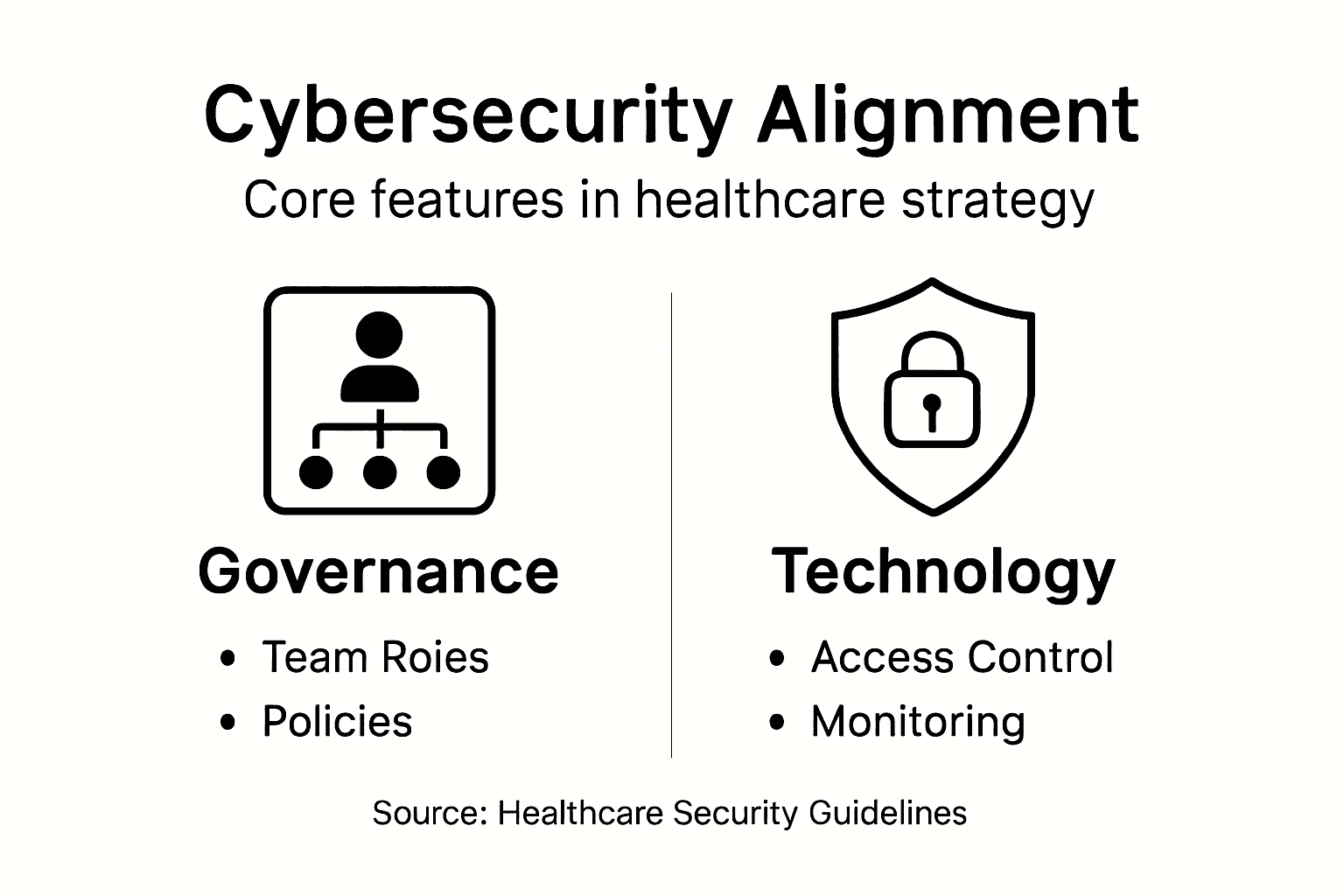
Core features of strategic cybersecurity alignment
Healthcare cybersecurity strategies demand comprehensive integration that goes far beyond traditional IT security approaches. Core cybersecurity features encompass a holistic approach protecting electronic health records, patient data systems, and organizational technological infrastructure through administrative, physical, and technical safeguards.
The critical components of strategic cybersecurity alignment include:
- Risk Management: Proactively identifying and mitigating potential vulnerabilities
- Regulatory Compliance: Ensuring adherence to HIPAA, NIST, and other healthcare security standards
- Technological Resilience: Developing robust defense mechanisms against evolving cyber threats
- Cultural Integration: Embedding security awareness throughout organizational processes
- Continuous Monitoring: Implementing real-time threat detection and response systems
Healthcare organizations must develop a multidimensional approach to cybersecurity that systematically reduces operational risks. This involves creating adaptive strategies that can quickly respond to emerging technological challenges while maintaining patient safety and data integrity.
Successful strategic alignment requires a structured implementation approach:
- Comprehensive organizational risk assessment
- Development of tailored security protocols
- Investment in advanced threat detection technologies
- Regular staff training and awareness programs
- Continuous performance evaluation and adaptation
Strategic cybersecurity alignment transforms technological defense from a cost center into a critical business enabler.
Pro tip: Create a cross-functional cybersecurity governance team that includes representatives from IT, clinical operations, legal, and executive leadership to ensure comprehensive strategic alignment.
Regulatory imperatives for healthcare leaders
Healthcare leaders face increasingly complex regulatory requirements that demand comprehensive and proactive cybersecurity strategies. HIPAA Security Rule modifications represent a critical evolution in mandating stringent electronic protected health information security protocols across healthcare organizations.
Key regulatory imperatives for healthcare cybersecurity leadership include:
- Comprehensive Documentation: Maintaining detailed security implementation records
- Continuous Risk Assessment: Regularly evaluating and updating cybersecurity vulnerabilities
- Strict Compliance Standards: Adhering to evolving federal and state regulatory requirements
- Technology Asset Management: Maintaining comprehensive inventories of digital infrastructure
- Incident Response Preparedness: Developing robust mechanisms for threat detection and mitigation
Healthcare organizations must navigate a complex regulatory landscape that increasingly demands higher accountability for protecting patient data and maintaining technological resilience. This requires a strategic approach that integrates legal compliance, technological innovation, and organizational risk management.
Successful regulatory compliance demands a structured implementation strategy:
- Conduct comprehensive cybersecurity gap analyses
- Develop enterprise-wide security governance frameworks
- Implement advanced threat detection technologies
- Create ongoing staff training and awareness programs
- Establish transparent reporting and accountability mechanisms
Regulatory compliance is no longer a checkbox exercise but a critical strategic imperative for healthcare organizations.
Pro tip: Develop a cross-functional compliance team that includes representatives from legal, IT, clinical operations, and executive leadership to ensure comprehensive regulatory alignment.
Operational benefits and competitive advantages
Healthcare organizations that strategically integrate cybersecurity can transform technological defense into a significant competitive advantage. Healthcare technology implementation reveals that proactive cybersecurity strategies directly contribute to operational efficiency, patient trust, and organizational resilience.
The key operational benefits of comprehensive cybersecurity integration include:
- Reduced Operational Disruptions: Minimizing system downtime and potential service interruptions
- Enhanced Patient Confidence: Building trust through robust data protection mechanisms
- Regulatory Compliance: Seamlessly meeting complex healthcare security standards
- Cost Efficiency: Preventing expensive data breaches and potential legal penalties
- Innovation Acceleration: Creating a secure environment for technological advancement
Cyber threat landscape analysis demonstrates that organizations with mature cybersecurity strategies experience significant competitive differentiation. These strategies enable healthcare providers to protect critical infrastructure, maintain patient safety, and create a reputation for technological trustworthiness.
This table highlights how comprehensive cybersecurity delivers distinct business advantages:
| Benefit | Organizational Impact | Strategic Value |
|---|---|---|
| Reduced Disruptions | Fewer service interruptions | Higher patient safety |
| Enhanced Patient Trust | Improved satisfaction and loyalty | Greater reputation |
| Innovation Acceleration | Faster tech adoption | Competitive edge |
| Cost Efficiency | Lower breach-related expenses | Better resource use |
Competitive advantages manifest through several strategic dimensions:
- Superior risk management capabilities
- Faster technology adoption
- Lower insurance and compliance costs
- Improved patient data protection
- Enhanced organizational reputation
Cybersecurity is no longer a technical requirement but a strategic business differentiator in healthcare.
Pro tip: Develop a metrics-driven cybersecurity program that quantifiably demonstrates value to organizational leadership and stakeholders.
Risks of insufficient cybersecurity integration
Healthcare organizations face profound vulnerabilities when cybersecurity integration remains incomplete or inadequate. Digital transformation risks reveal a complex landscape of potential threats that can compromise patient safety, organizational reputation, and operational continuity.
The primary risks of insufficient cybersecurity integration include:
- Data Breach Exposure: Increased likelihood of unauthorized patient information access
- Operational Disruption: Potential system-wide failures and service interruptions
- Regulatory Penalties: Substantial financial and legal consequences for non-compliance
- Reputation Damage: Loss of patient trust and organizational credibility
- Patient Safety Compromises: Direct risks to medical treatment and patient care
Emerging threat landscapes demonstrate that healthcare organizations are increasingly vulnerable to sophisticated cyber threats, including ransomware, supply chain attacks, and social engineering campaigns that exploit technological vulnerabilities.
Specific high-impact risks organizations may encounter include:
- Potential multi-million dollar ransom demands
- Extended system downtime affecting patient care
- Permanent loss of critical medical records
- Compliance violations leading to significant penalties
- Permanent reputational damage
Insufficient cybersecurity integration transforms technological infrastructure from a protective shield into a potential organizational liability.
Pro tip: Conduct comprehensive cybersecurity risk assessments at least quarterly and immediately address identified vulnerabilities to prevent potential systemic failures.
Empower Your Healthcare Cybersecurity Strategy Today
Healthcare organizations face complex challenges in integrating cybersecurity strategies that protect patient data, ensure regulatory compliance, and maintain operational continuity. If you are grappling with evolving cyber threats or striving to transform cybersecurity from a mere technical requirement into a strategic business advantage you need expert guidance tailored to healthcare's unique landscape. Key pain points like risk management, compliance with HIPAA and NIST frameworks, and continuous monitoring demand a partner that understands both technology and business impact.

Heights Consulting Group offers strategic consulting and technical services designed to help healthcare leaders build resilient cybersecurity programs. Our expertise includes implementing frameworks such as NIST and SOC 2, advanced threat detection, and compliance solutions aligned with your organizational goals. Don’t let insufficient cybersecurity put your patient data and reputation at risk. Visit Heights Consulting Group to learn how we can help you achieve complete cybersecurity integration that supports both regulatory imperatives and competitive advantage. Start strengthening your cybersecurity strategy now with our proven advisory and incident response services at Heights Consulting Group and discover how we partner to make cybersecurity a core part of your healthcare business success.
Frequently Asked Questions
What is the primary goal of a cybersecurity strategy in healthcare?
The primary goal of a cybersecurity strategy in healthcare is to protect sensitive patient data, ensure operational continuity during potential cyber incidents, and maintain regulatory compliance with standards such as HIPAA.
How can healthcare organizations assess their cybersecurity risks?
Healthcare organizations can assess their cybersecurity risks by conducting comprehensive risk assessments, performing gap analyses against regulatory framework requirements, and continuously monitoring emerging threats.
What frameworks are essential for healthcare cybersecurity integration?
Essential frameworks for healthcare cybersecurity integration include the NIST Cybersecurity Framework, the HIPAA Security Rule, ISO 27001, and HITRUST CSF, each offering unique approaches to managing risk and ensuring compliance.
What are the operational benefits of a strong cybersecurity strategy in healthcare?
A strong cybersecurity strategy in healthcare can lead to reduced operational disruptions, enhanced patient confidence, improved regulatory compliance, cost efficiency in preventing data breaches, and acceleration in innovation of healthcare technologies.