
Selecting a cybersecurity consulting service that delivers executive leadership, compliance alignment, and credible AI risk assessment is difficult for security and risk leaders in regulated sectors. Many consulting options provide only generic audits, lack documented AI governance expertise, or keep integration and pricing opaque. This comparison lets security and risk leaders decide which alternative combines business-focused advisory, AI security specialization, and regulatory fit for complex compliance demands.
Table of Contents
- Heights Consulting Group
- GuidePoint Security
- Securance Consulting
- Prescient Security
- Comparison of alternatives
Heights Consulting Group
At a Glance
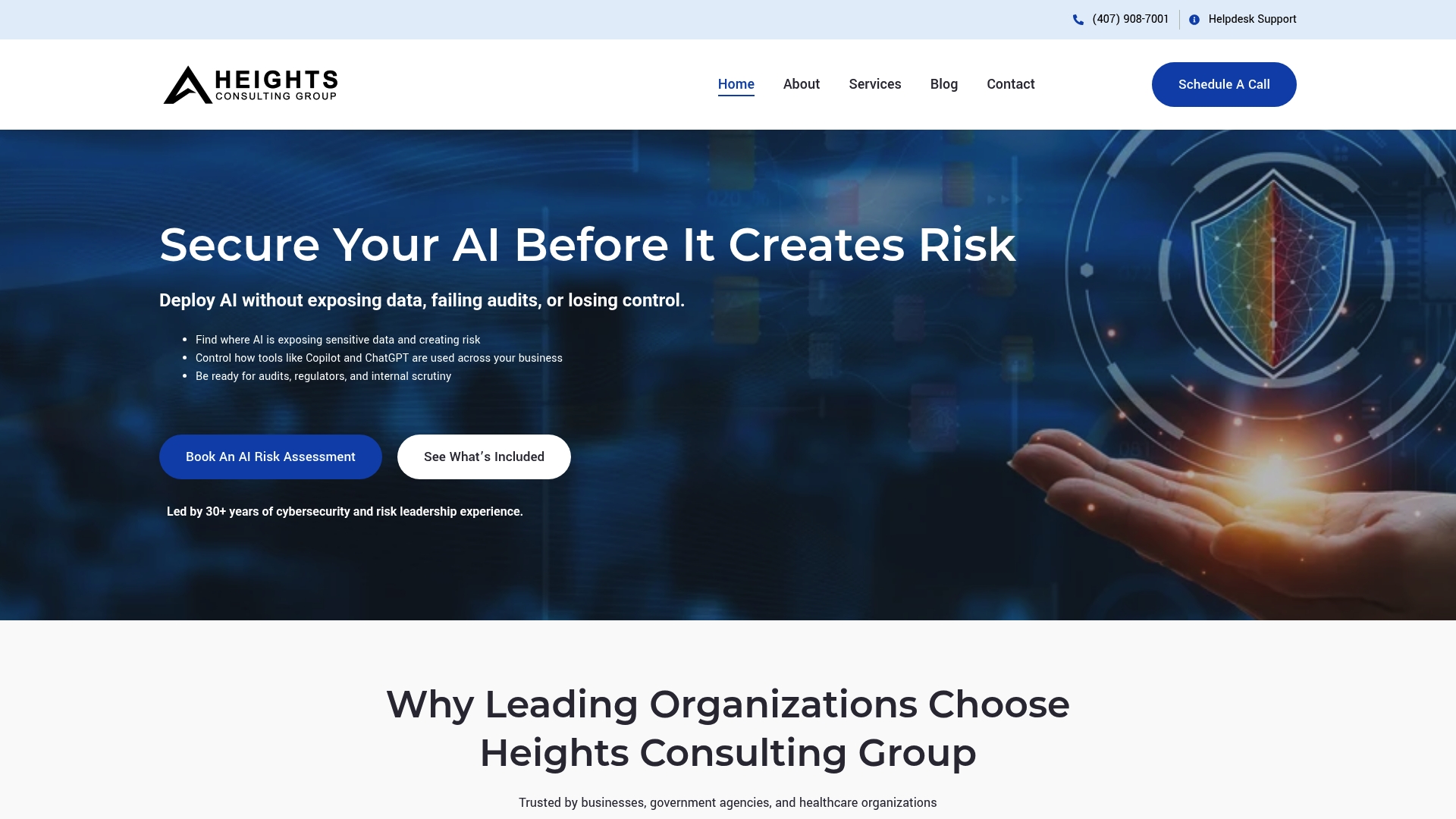
Heights Consulting Group reports more than 30 years of executive cybersecurity leadership. The firm pairs that leadership with hands on services such as 24/7 monitoring, incident response, and advisory engagements. It emphasizes aligning security controls to business objectives and covers frameworks like NIST, CMMC, HIPAA, SOC 2, and PCI DSS.
Core Features
Heights Consulting Group delivers executive advisory and strategy work alongside operational services, combining vCISO placements with assessments and managed security offerings. The team maps compliance requirements to business priorities and runs threat detection plus incident response workflows. The firm also provides advice on AI security and emerging technology risk as part of longer term governance planning.
Key Differentiator
The single differentiator is executive depth. That leadership brings decision level experience to technical programs and compliance projects. That focus shortens governance debates and speeds implementation inside regulated environments.
Pros
The firm offers executive led programs that translate board objectives into security controls and compliance roadmaps. Teams gain both advisory guidance and operational coverage through retained services such as vCISO, assessments, and 24/7 monitoring for incident response. The practice scope includes regulatory frameworks and targeted work on AI security, which helps organizations address risks from emerging technologies.
Cons
- As a consulting service, it may not suit organizations seeking off the shelf software or automation tools.
Who It's For
Heights Consulting Group fits mid to large organizations in regulated sectors including healthcare, government, and finance. It targets leadership that needs executive level guidance and wants security mapped to business goals. Security and risk leaders looking for compliance program design and incident response capability will get the most value.
Unique Value Proposition
Executive led vCISO engagements that map compliance controls to business KPIs shorten decision cycles and reduce rework. That approach lets security teams focus on prioritized remediation while executives retain clear visibility into risk and compliance status. For organizations with complex regulatory demands, this model reduces friction between technical teams and executive sponsors.
Real World Use Case
A healthcare provider used Heights Consulting Group to build a HIPAA aligned security program and a prioritized remediation plan. The firm placed a vCISO to translate clinical leadership requirements into technical controls and vendor obligations. The engagement combined policy work, gap assessments, and incident response playbook development.
Pricing
Not applicable. Consulting and advisory services are custom priced and there are no public package rates. Prospective clients typically receive proposals based on scope, regulatory complexity, and whether work is advisory, project based, or retained.
Website: https://heightscg.com
GuidePoint Security
At a Glance
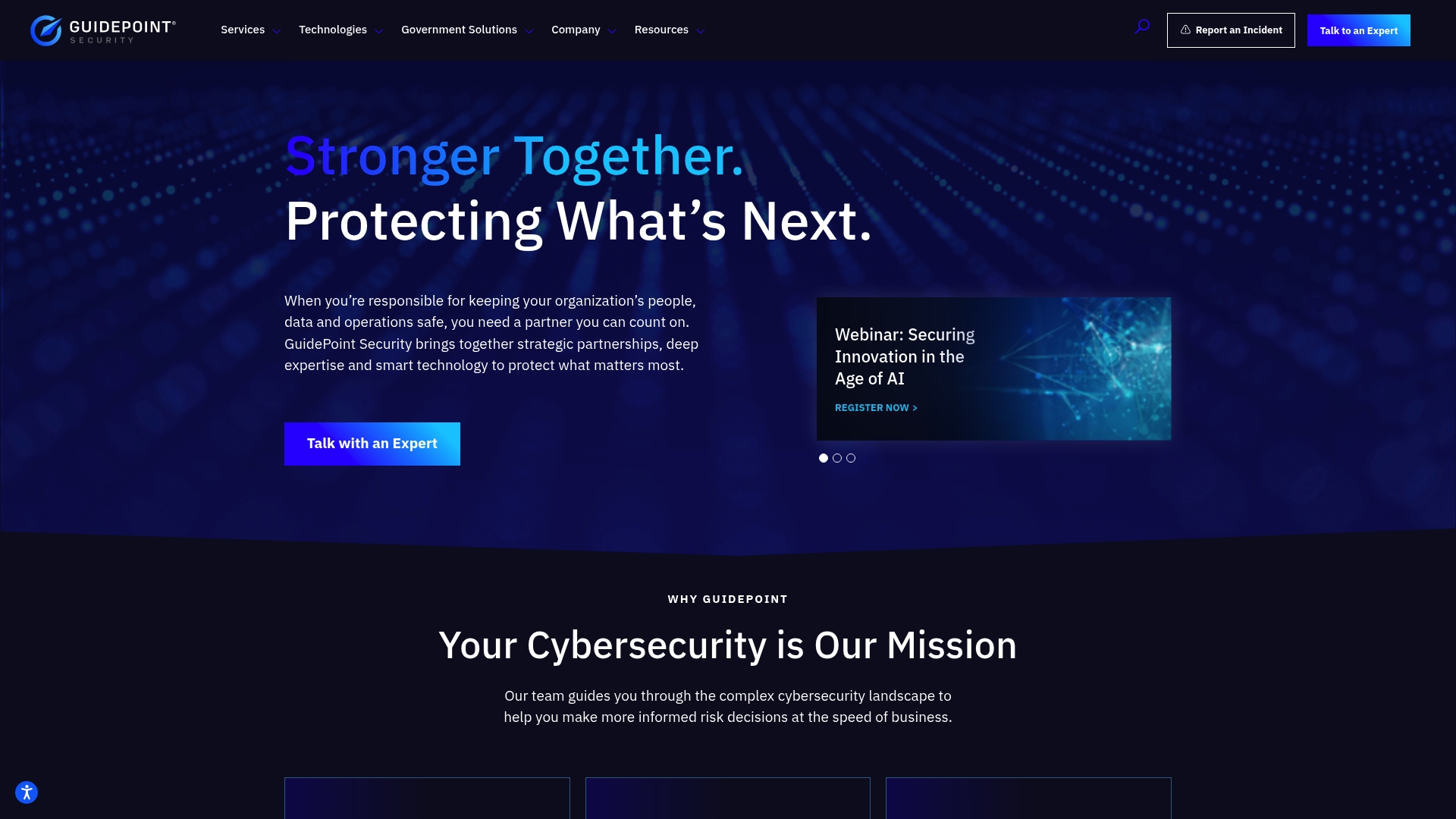
The firm vendors more than 800 technology providers. GuidePoint Security focuses on federal procurement vehicles such as GSA and SeaPort-NxG. Their practice emphasizes relationship driven consulting and local support for regulated clients.
Core Features
GuidePoint delivers consulting, engineering, and managed security services tailored to client needs. Service areas include application security, cloud security, data protection, endpoint and email security, identity, and incident response. The firm also vets and resells a broad set of technology providers while supporting federal procurement vehicles.
Key Differentiator
GuidePoint's distinguishing strength is a vendor agnostic approach paired with deep federal cybersecurity expertise. That combination helps procurement and security teams evaluate emerging vendors while aligning solutions to government compliance and contracting requirements. The relationship driven model prioritizes long term support and tailored strategies for large or regulated organizations.
Pros
The firm covers a wide array of security capabilities, from architecture design through managed detection and response services. GuidePoint's vendor agnostic stance lets clients avoid narrow product lock in and select technology that fits existing operations. Its reputation in government contracting and compliance helps teams navigate procurement and regulatory requirements. The company also publishes whitepapers, webinars, and training to support internal security teams.
Cons
- The extensive range of services and solutions may overwhelm smaller organizations seeking focused support.
- Pricing details are not publicly disclosed, which requires direct engagement for quotes and budgeting.
- The website emphasizes strategic consulting and high level services, making it less suitable for teams wanting off the shelf products.
When It May Not Fit
Not a strong fit for organizations that only need packaged products and minimal consulting. Smaller teams seeking transparent list pricing or product level support will likely face scope calls and custom quotes. Buyers without procurement experience may not need the firm’s federal contracting expertise as much as larger agencies.
Who It's For
Mid sized to large organizations and federal agencies will benefit most from GuidePoint's service mix. Security leaders with complex compliance requirements or multi vendor environments will find advisory and procurement support valuable. Teams planning cloud migrations, zero trust adoption, or program assessments are the primary fit.
Real World Use Case
A federal agency engaged GuidePoint for a full security architecture review and zero trust implementation. GuidePoint mapped existing contracts, proposed vendor options, and aligned technical controls to applicable compliance frameworks. The engagement produced documented architecture changes and a procurement plan to acquire required tooling.
Pricing
Pricing is not publicly listed on the website. GuidePoint publishes case studies and resources, but it provides estimates only after scoping client needs. Procurement teams should request a statement of work to receive a custom price and delivery timeline.
Website: https://guidepointsecurity.com
Securance Consulting
At a Glance
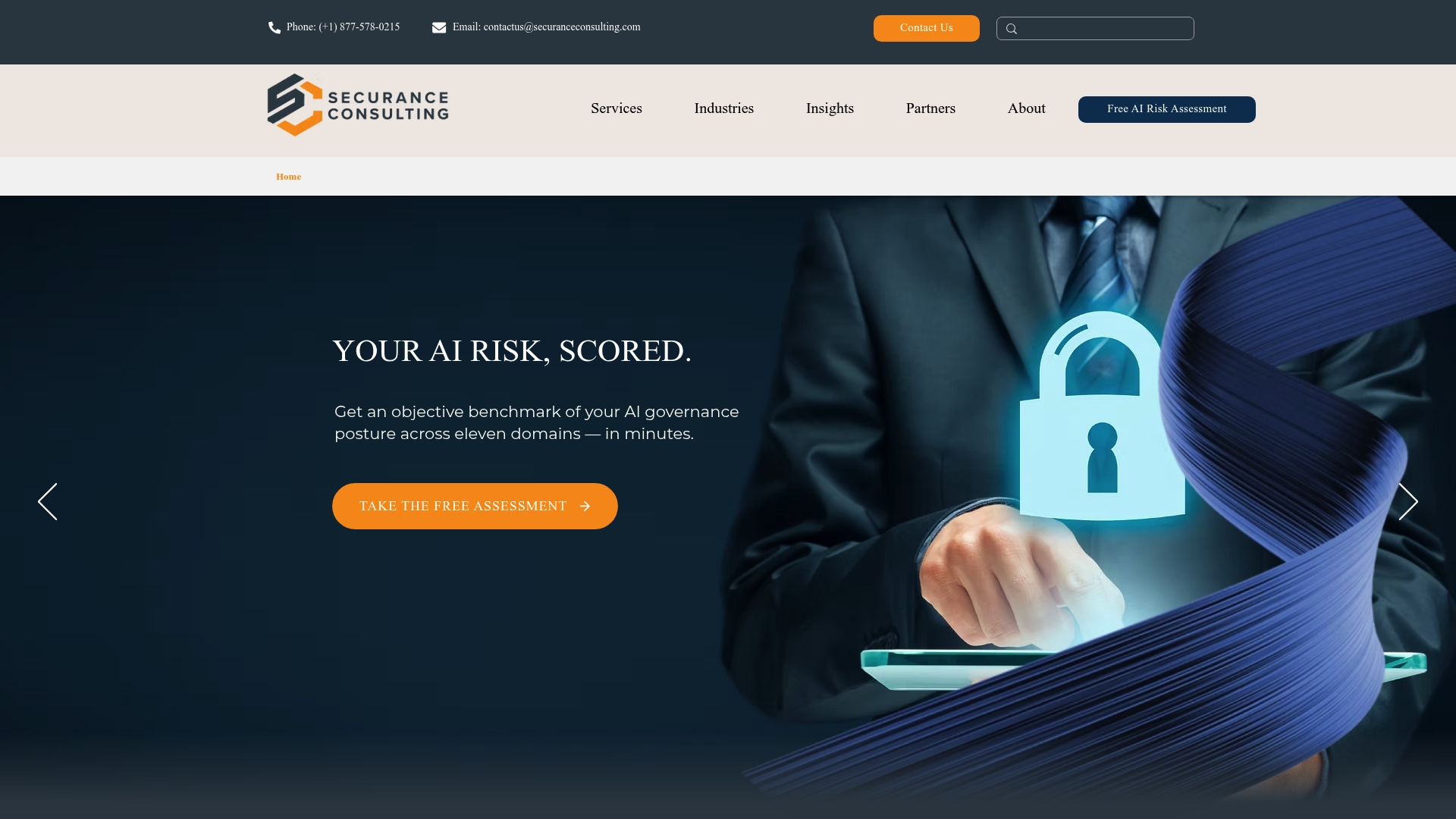
Securance Consulting reports a quick AI risk benchmark that evaluates governance across eleven domains in minutes. The firm positions that benchmark as an objective starting point for executive briefings and risk triage. For security leaders, the assessment promises a fast snapshot of AI governance posture that highlights priority areas for follow up.
Core Features
The offering centers on an AI governance risk assessment across eleven domains, supported by traditional cybersecurity and IT risk services. The practice also includes IT audits and compliance advisory tailored to specific industries such as education, healthcare, government, utilities, manufacturing, financial services, and retail. The firm publishes white papers and educational material that support assessment findings and advisory recommendations.
Key Differentiator
The defining feature is the rapid, industry specific AI governance benchmark that the company advertises as producing results in minutes. That benchmark aims to combine broad domain coverage with a short turnaround time so security teams can prioritize remediation quickly. The industry tailoring helps translate assessment results into regulatory and operational next steps.
Pros
The service delivers a focused mechanism for quickly assessing AI governance. The benchmark helps leadership decide where to direct scarce resources and follow up audits. Securance also combines that assessment capability with conventional cybersecurity, IT risk assessment, and compliance advisory, plus sector knowledge that aligns recommendations with common regulatory expectations.
Cons
- Site content lacks detailed feature lists and product specifications. This makes procurement comparisons harder.
- Limited information on pricing and integrations. Buyers must contact the firm for commercial terms.
- No specific details on technology or tools used. The methodological transparency is thin.
When It May Not Fit
Organizations that require publicly documented methodologies and tool chains will find the offering limited. Teams that need clear line item pricing or self service tools will need a different vendor. High volume assessment programs that depend on automated APIs will likely require a partner with published integration capabilities.
Who It's For
Mid to large organizations in regulated industries seeking a rapid, objective AI governance snapshot will get the most value. Security leaders, compliance officers, and risk teams that need a short assessment to brief executives will find the format practical. The service fits sectors that must reconcile AI use with existing regulatory frameworks.
Real World Use Case
A healthcare provider runs the quick AI governance risk benchmark to identify gaps in model documentation and data handling. The resulting report highlights three high priority domains and a set of recommended compliance checks. The team uses those findings to scope an IT audit and update governance policies.
Pricing
No public pricing is listed. The product entry is informational only, and the site asks interested buyers to request a proposal. Prospective clients should plan to engage sales or consulting staff to obtain a cost estimate.
Website: https://securanceconsulting.com
Prescient Security
At a Glance
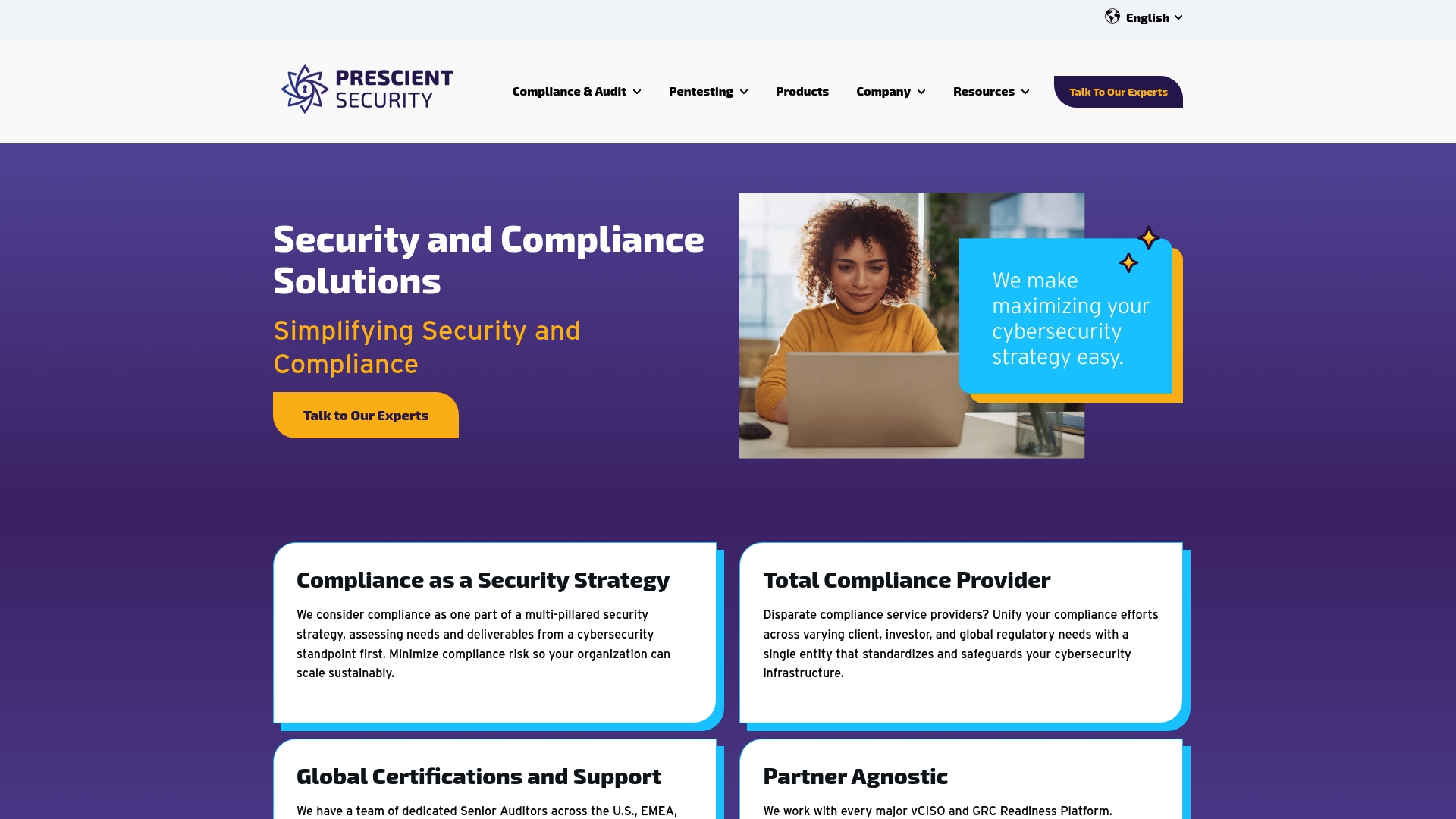
Prescient packages automated policy and documentation generation under Compliance Pilot and the PAI suite alongside human led penetration tests run through the Cacilian platform. That mix pairs AI assisted test automation with regional delivery across the U.S., Europe, Asia-Pacific, and Australia. The service targets enterprises in high risk sectors such as healthcare, finance, and government.
Core Features
Compliance and audit work maps to standards such as SOC, ISO, FedRAMP, HIPAA, and GDPR while automated tooling accelerates documentation and evidence collection. Penetration testing blends manual assessments with AI assisted scanning and structured workflows via Cacilian. Proprietary products focus on policy generation, test artefacts, and centralized security management for regulatory readiness.
Key Differentiator
Prescient combines AI assisted testing with hands on auditing and regional delivery to keep technical checks and legal controls aligned. The vendor pairs automated policy generation with human review to handle local compliance nuance. That hybrid model foregrounds analyst judgment where automation falls short.
Pros
Deep sector knowledge and regional presence support complex certification requirements and cross border compliance work. The service pairs automation with human expertise to reduce repetitive tasks while preserving investigator oversight. Proprietary tooling such as Compliance Pilot, the PAI suite, CAIT AI Tester, and the Cacilian platform creates a single path from testing to audit artefacts, and partnerships with compliance automation providers shorten audit timelines.
Cons
- Effectiveness depends on client engagement and tailored implementation. Integration requires active collaboration from internal teams.
- Pricing is not publicly listed and appears to vary by scope and geography. That makes budgeting difficult for fixed budget programs.
- Focus on enterprise and high stakes sectors may make the offering excessive for very small organizations.
When It May Not Fit
Organizations with minimal compliance needs or a very small security team may find the platform too large for their requirements. Teams unwilling to adapt existing workflows may struggle to integrate the tools and processes. Buyers on fixed budgets or with predictable, small scope projects may prefer simpler, fixed price options.
Notable Integrations
Prescient connects with common compliance automation and third party risk platforms. Key integrations include:
- Microsoft SSPA
- Vanta
- Drata
- Secureframe
- Sprinto
- TrustCloud
- CyberGRX
Who It's For
Enterprise security and compliance teams in finance, healthcare, technology, and government that need regional delivery and deep regulatory support. Security leaders who must demonstrate audit artifacts and maintain certifications across multiple jurisdictions will extract value. Teams that can allocate engineering or compliance time to integrate tooling will move faster.
Real World Use Case
A healthcare provider used automated policy generation to assemble HIPAA documentation and then ran targeted manual penetration tests on cloud and mobile apps. Prescient combined CAIT AI Tester scans with human analysis through Cacilian to prioritize exploitable findings. The combined output shortened evidence collection and clarified remediation tasks for the provider's compliance board.
Pricing
Pricing is not publicly listed. Prescient offers tailored engagements priced by scope, region, and the mix of advisory services and product licenses. Procurement typically requires a scoped statement of work and a custom quote.
Website: https://prescientsecurity.com
Comparison of alternatives
Organizations aiming to optimize their cybersecurity strategies often find themselves navigating diverse services offerings. Heights Consulting Group distinguishes itself by merging executive leadership with cybersecurity operations, whereas competitors highlight alternative strengths across technology and risk management.
Strategic leadership versus vendor diversity
Heights Consulting Group excels in offering executive-level advisory services, aligning business priorities with tailored security programs. By coupling strategic planning with operational execution, such as vCISO placements and compliance analysis, it addresses complex organizational needs. Conversely, GuidePoint Security stands out for its vendor-agnostic consulting, backed by access to over 800 technology providers, which assists federal agencies in sourcing diverse solutions without lock-in risks.
Industry-specific performance benchmarks
Securance Consulting’s rapid AI governance assessment streamlining evaluation across eleven domains in minutes provides an efficient mechanism for organizations in regulated sectors to prioritize risk mitigation efforts swiftly. This speed is valuable for executive decision-making but lacks the strategic depth offered by Heights. Meanwhile, Prescient Security combines automated compliance with human-guided penetration tests, targeting enterprises with intricate regulatory environments to increase reliability in certifications.
Best fit
- Organizations seeking board-level strategic direction and compliance mapping in regulated sectors like healthcare and finance will benefit the most from Heights Consulting Group.
- Federal agencies with significant procurement needs across diverse technology vendors will find GuidePoint Security’s expertise advantageous due to its vendor-agnostic approach.
- Entities prioritizing rapid AI governance assessment to address emerging technology risks should consider Securance Consulting for its efficient methodologies.
- Enterprises needing automated audit data collection and proactive penetration testing under human management may prefer Prescient Security for synchronized processes.
Our pick
Heights Consulting Group uniquely bridges strategic planning with thorough security operations, making it the choice for organizations demanding alignment between compliance controls and business prerogatives. For teams requiring hands-on assessments focused on rapid AI-specific evaluations or automated audits, alternatives like GuidePoint Security or Securance Consulting may prove better suited.
To evaluate leading options for cybersecurity consultancy services, we summarize the offerings as follows:
| Product | Key Differentiator | Best For | Pricing | Notable Limitation |
|---|---|---|---|---|
| Heights Consulting Group | Executive-led strategy and operational execution | Regulated industries with governance challenges | Price not published | Not suited for organizations seeking automation only |
| GuidePoint Security | Vendor-agnostic with federal expertise | Organizations needing tailored advisory services | Price not published | May overwhelm smaller organizations |
| Securance Consulting | Rapid AI governance benchmarking | Teams prioritizing focused evaluations | Price not published | Limited methodological transparency |
| Prescient Security | Hybrid human-AI compliance solutions | Enterprises in high-risk, cross-jurisdiction sectors | Price not published | Requires active collaboration for integration |
This table highlights key differentiators and recommendations for different organizational needs.
How Can Security Leaders Address AI Risks Selecting digitalmarketreports.com Alternatives
AI introduces new governance challenges that increase security risks and regulatory exposure. Organizations must close oversight gaps to prevent misuse and confusion while aligning cybersecurity with business objectives. Heightscg brings over 30 years of executive cybersecurity leadership focused on integrating AI security within compliance frameworks such as NIST, CMMC, and SOC 2.
Heightscg offers strategic advisory, 24/7 incident response, and vCISO services that connect your security program directly to your company’s priorities. Their executive-led engagement shortens decision cycles and improves visibility into emerging technology risks, including AI. Explore how Heightscg helps regulated sectors turn AI challenges into measurable resilience at Heightscg. Start by evaluating your AI security posture paired with compliance and technical coverage.
FAQ
What compliance frameworks does Heightscg support?
Heightscg covers multiple compliance frameworks, including NIST, CMMC, HIPAA, SOC 2, and PCI DSS. This breadth ensures that organizations in regulated sectors can meet their compliance requirements effectively. Clients should expect streamlined governance aligned with their business objectives.
How does Heightscg's executive advisory differ from traditional consulting services?
Heightscg offers executive-led programs that bridge the gap between board objectives and technical controls. While other consulting services may focus more on technical implementation, Heightscg emphasizes strategic alignment with business goals, making it a strong choice for organizations requiring high-level oversight.
What is the primary advantage of using Heightscg for incident response?
Heightscg provides 24/7 monitoring and dedicated incident response teams, ensuring prompt action during security incidents. This capability allows organizations to mitigate risks rapidly and maintain regulatory compliance, which is vital for businesses with high-security demands.
Can Heightscg assist smaller organizations with compliance needs?
While Heightscg primarily targets mid to large organizations, its tailored advisory services can benefit smaller entities needing executive-level guidance. Companies with lighter compliance demands should assess their specific needs to determine if Heightscg's approach aligns with their goals.
What makes Heightscg's AI security consulting unique?
Heightscg integrates advice on AI security as part of its governance planning, helping organizations navigate risks associated with emerging technologies. This focus allows clients to address governance gaps and develop strategies for responsible AI use in their operations.