

Every CISO and compliance officer in a United States healthcare organization knows that protecting sensitive patient data brings challenges far beyond standard information security. With pressures from complex federal regulations like HIPAA, the right cybersecurity strategy must balance strict compliance with adaptable defense against fast-changing cyber threats. This article breaks down the unique demands of healthcare security, highlighting advanced approaches for risk management and compliance that align with evolving legal and operational realities.
Table of Contents
- Defining Cybersecurity In Regulated Industries
- Unique Compliance Challenges By Sector
- Key Regulatory Frameworks And Laws Explained
- Advanced Strategies For Risk Management And Audit Readiness
- Common Pitfalls And Emerging Threats In 2026
Key Takeaways
| Point | Details |
|---|---|
| Specialized Cybersecurity Frameworks | Cybersecurity in regulated industries requires tailored strategies that combine technological, legal, and operational elements to comply with complex regulations. |
| Unique Compliance Challenges | Each sector, such as healthcare and finance, faces specific compliance challenges that necessitate industry-specific cybersecurity frameworks. |
| Advanced Risk Management | Organizations should adopt comprehensive risk management approaches that include continuous monitoring, proactive risk mitigation, and robust incident response plans to address evolving cyber threats. |
| Emerging Threats and Adaptive Strategies | The rise of AI-powered attacks and complex supply chain vulnerabilities demands that organizations implement adaptive cybersecurity measures to stay ahead of sophisticated threats. |
Defining Cybersecurity in Regulated Industries
Cybersecurity in regulated industries represents a strategic framework designed to protect sensitive information systems while ensuring compliance with complex legal and industry standards. Unlike generic cybersecurity approaches, these specialized strategies recognize that data protection goes far beyond technological safeguards.
In regulated sectors like healthcare and finance, cybersecurity becomes a comprehensive risk management discipline that encompasses technological, legal, and operational dimensions. Cybersecurity standards developed by NIST emphasize protecting critical assets through robust frameworks that address evolving cyber risks with precision and adaptability.
Key characteristics of cybersecurity in regulated environments include:
- Strict adherence to industry-specific compliance requirements
- Comprehensive risk assessment and mitigation strategies
- Continuous monitoring and adaptive security protocols
- Advanced threat detection and incident response capabilities
- Robust documentation and audit trail maintenance
The fundamental goal is transforming regulatory compliance from a burdensome requirement into a strategic business advantage. Organizations that successfully integrate cybersecurity as a core operational strategy can differentiate themselves by demonstrating superior data protection, building customer trust, and reducing potential financial and reputational risks.
Pro tip: Develop a cross-functional cybersecurity team that includes representatives from IT, legal, compliance, and executive leadership to create a holistic approach to regulatory protection.
Unique Compliance Challenges by Sector
Cybersecurity compliance presents dramatically different challenges across various regulated industries, with each sector facing unique technological, legal, and operational complexities. Cybersecurity landscape reveals distinct regulatory requirements that demand sector-specific strategies and adaptive security frameworks.
In healthcare, compliance challenges center around protecting patient data privacy, meeting stringent Health Insurance Portability and Accountability Act (HIPAA) regulations, and securing complex electronic health record systems. Financial institutions, conversely, must navigate intricate data protection standards, anti-money laundering regulations, and continuous threat monitoring across global digital transaction networks.
Key sector-specific compliance challenges include:
- Healthcare:
- Protecting patient health information
- Maintaining HIPAA compliance
- Securing medical device networks
- Managing third-party vendor access
- Financial Services:
- Preventing financial fraud
- Protecting customer financial data
- Meeting international banking regulations
- Implementing robust transaction monitoring
- Critical Infrastructure:
- Defending against potential national security threats
- Protecting industrial control systems
- Ensuring continuous operational resilience
- Managing complex interconnected technology environments
Each industry requires a nuanced approach that balances robust security protocols with operational efficiency, recognizing that compliance is not a one-size-fits-all solution but a dynamic, context-specific challenge.

Here's a concise comparison of compliance challenges across major regulated industries:
| Industry Sector | Main Compliance Challenge | Key Stakeholder Impact |
|---|---|---|
| Healthcare | Patient data privacy protection | Medical staff, patients |
| Financial Services | Fraud prevention and data security | Bank clients, regulators |
| Critical Infrastructure | Ensuring operational resilience | Utility operators, public |
Pro tip: Conduct regular cross-functional compliance assessments that include representatives from IT, legal, and operational teams to identify and address sector-specific cybersecurity vulnerabilities.
Key Regulatory Frameworks and Laws Explained
The United States cybersecurity legal landscape is a complex network of interconnected regulations designed to protect sensitive information across various industries. U.S. cybersecurity legal framework encompasses multiple critical statutes that establish comprehensive guidelines for data protection, privacy, and security breach prevention.
Key federal regulations play critical roles in defining cybersecurity compliance requirements across different sectors. The Health Insurance Portability and Accountability Act (HIPAA) governs patient data protection in healthcare, while the Federal Information Security Management Act (FISMA) sets security standards for federal government systems. Financial institutions must adhere to regulations like the Gramm-Leach-Bliley Act, which mandates protecting consumer financial information.
Major regulatory frameworks include:
- Healthcare Regulations:
- HIPAA Privacy and Security Rules
- HITECH Act
- FDA Medical Device Cybersecurity Guidelines
- Financial Services Regulations:
- Gramm-Leach-Bliley Act
- Securities and Exchange Commission (SEC) Cybersecurity Guidelines
- Payment Card Industry Data Security Standard (PCI DSS)
- Critical Infrastructure Regulations:
- Energy Policy Act
- North American Electric Reliability Corporation (NERC) Critical Infrastructure Protection
- Transportation Security Administration Cybersecurity Requirements
Each regulatory framework establishes specific requirements for data protection, incident reporting, risk management, and organizational accountability, reflecting the unique vulnerabilities of different industry sectors.
A summary of major U.S. cybersecurity regulations and their core focus:
| Regulation | Sector Targeted | Core Requirement | Business Impact |
|---|---|---|---|
| HIPAA | Healthcare | Safeguard health data | Prevent medical data breaches |
| Gramm-Leach-Bliley Act | Financial Services | Protect consumer financial data | Enhance client trust |
| Energy Policy Act | Critical Infrastructure | Secure energy sector systems | Ensure power grid stability |
Pro tip: Develop a comprehensive compliance mapping document that cross-references multiple regulatory requirements to identify overlapping security controls and streamline your compliance strategy.
Advanced Strategies for Risk Management and Audit Readiness
Risk management in regulated industries demands a proactive and comprehensive approach that goes beyond traditional compliance checkboxes. NIST Risk Management Framework provides systematic cybersecurity risk strategies that enable organizations to transform compliance from a mandatory requirement into a strategic business advantage.
Successful risk management requires a holistic methodology that integrates technological solutions, organizational processes, and continuous monitoring. Cybersecurity risk assessment involves identifying potential vulnerabilities, evaluating their potential impact, and developing targeted mitigation strategies that align with industry-specific regulatory requirements.
Key advanced risk management strategies include:
- Comprehensive Risk Identification:
- Conduct thorough asset inventories
- Map interconnected technology ecosystems
- Identify potential threat vectors
- Assess current security control effectiveness
- Proactive Risk Mitigation:
- Implement multi-layered security controls
- Develop incident response plans
- Create redundant security mechanisms
- Establish robust vendor risk management protocols
- Continuous Monitoring Practices:
- Real-time threat detection systems
- Regular vulnerability scanning
- Automated compliance tracking
- Performance metrics and reporting
Audit readiness requires more than documentation—it demands a dynamic, evidence-based approach that demonstrates consistent adherence to regulatory standards and proactive risk management.
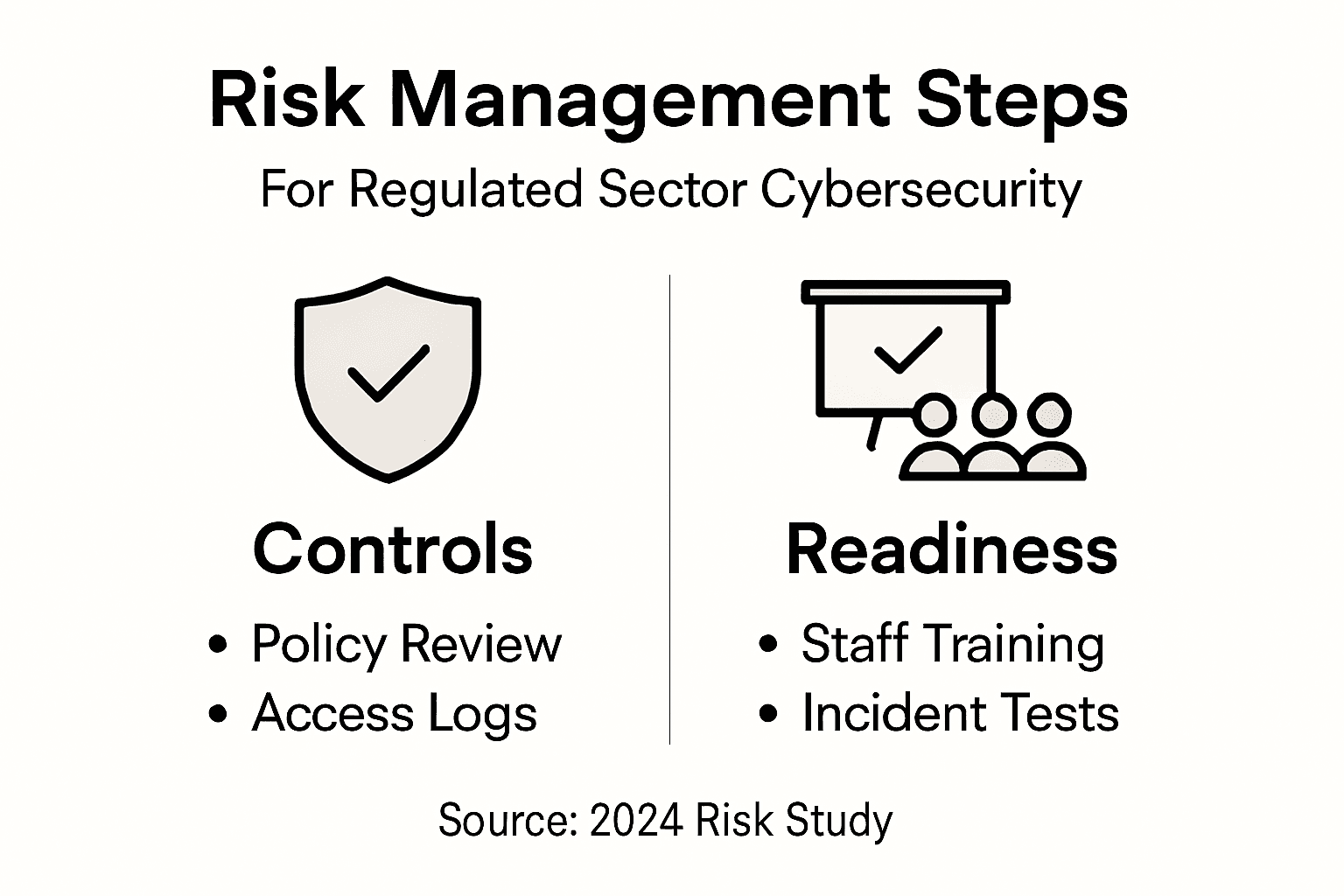
Pro tip: Develop a centralized risk management dashboard that provides real-time visibility into compliance status, potential vulnerabilities, and mitigation progress across your entire organizational ecosystem.
Common Pitfalls and Emerging Threats in 2026
Cybersecurity landscapes are rapidly evolving, presenting unprecedented challenges for regulated industries. Global cybersecurity outlook reveals accelerating technological risks driven by complex technological transformations and geopolitical uncertainties.
The most significant emerging threats in 2026 encompass sophisticated technological vulnerabilities that exploit advanced artificial intelligence capabilities. Cyber threats are becoming increasingly complex, with malicious actors leveraging machine learning algorithms to create more convincing social engineering attacks, sophisticated deepfake technologies, and highly targeted infiltration strategies.
Key emerging threats and common organizational pitfalls include:
- Artificial Intelligence-Powered Attacks:
- Advanced machine learning manipulation
- Automated vulnerability discovery
- Hyper-personalized phishing campaigns
- AI-generated social engineering scripts
- Supply Chain and Infrastructure Vulnerabilities:
- Interdependent technology ecosystem risks
- Increased geopolitical cyber conflict potential
- Critical infrastructure targeting
- Complex vendor network penetration strategies
- Human Factor Vulnerabilities:
- Limited cybersecurity awareness
- Inadequate training programs
- Complex technological skill gaps
- Psychological manipulation techniques
Organizations must develop adaptive, proactive cybersecurity strategies that anticipate and mitigate these sophisticated, technology-driven risks before they can cause significant operational disruptions.
Pro tip: Implement continuous AI-driven threat monitoring systems that can dynamically adapt and predict potential vulnerability vectors across your technological ecosystem.
Transform Compliance Challenges into Strategic Cybersecurity Advantages
Regulated industries face ever-evolving cybersecurity risks that demand more than basic protections. This article highlights the critical need to integrate compliance with frameworks like NIST and HIPAA into a comprehensive risk management strategy. If you are struggling with sector-specific challenges such as patient data privacy, financial fraud prevention, or critical infrastructure resilience, you understand how important it is to move beyond checklists and build adaptive, continuously monitored security programs.
At Heights Consulting Group, we specialize in helping organizations turn these demanding compliance requirements into a competitive edge. With tailored solutions including managed cybersecurity, incident response, and advanced threat hunting aligned to regulatory standards, we empower your business to stay ahead of emerging threats. Whether your focus is on achieving audit readiness or embedding AI-driven security, our experienced team acts as a strategic partner committed to your success.
Take control of your cybersecurity compliance today.
Explore how our expert guidance and technical services can simplify complex regulatory landscapes and improve your risk posture. Visit Heights Consulting Group and discover tailored strategies that transform compliance into a business advantage. Start your journey now by connecting with our team and gaining the confidence to protect your critical assets.
Learn more about our compliance frameworks and risk management solutions designed specifically for regulated industries.
Frequently Asked Questions
What is cybersecurity in regulated industries?
Cybersecurity in regulated industries is a strategic framework designed to protect sensitive information systems while ensuring compliance with legal and industry standards, focusing on risk management that encompasses technological, legal, and operational dimensions.
What are the key compliance challenges for healthcare organizations?
Key compliance challenges for healthcare organizations include protecting patient data privacy, maintaining HIPAA compliance, securing electronic health record systems, and managing third-party vendor access.
How can organizations transform regulatory compliance into a competitive advantage?
Organizations can transform regulatory compliance into a competitive advantage by integrating cybersecurity as a core operational strategy, showcasing superior data protection, building customer trust, and reducing financial and reputational risks.
What are advanced strategies for risk management in regulated industries?
Advanced strategies for risk management in regulated industries include comprehensive risk identification, proactive risk mitigation through multi-layered security controls, and continuous monitoring practices to ensure ongoing compliance and security effectiveness.
Recommended
- Regulatory Compliance in Cybersecurity: Why It Matters
- Navigating Complex Cybersecurity Regulations in Healthcare - Heights Consulting Group
- Unlocking the Hidden Value of Compliance in Business Growth - Heights Consulting Group
- Unlocking Success: The Key Benefits of Comprehensive Compliance Consulting for Regulated Industries - Heights Consulting Group