

Cyber threats cost the American healthcare sector over $13 billion each year, underscoring the urgent need for strategic defenses. CISOs and compliance officers face mounting pressure to protect sensitive patient data while keeping up with rapid regulatory shifts. Understanding how cybersecurity frameworks shape risk management and regulatory alignment empowers leaders to build resilient, compliant systems that safeguard operations and trust.
Table of Contents
- Defining Cybersecurity Frameworks in Healthcare
- Key Frameworks and Compliance Standards
- How Frameworks Strengthen Risk Management
- Integrating Security With Business Objectives
- Adapting Frameworks to Regulatory Changes
Key Takeaways
| Point | Details |
|---|---|
| Importance of Cybersecurity Frameworks | Structured approaches are essential for protecting sensitive medical information and critical infrastructure from cyber threats. |
| Key Compliance Frameworks | Organizations must align with frameworks like HIPAA, NIST, and HICP to enhance their cybersecurity posture and ensure patient data protection. |
| Integration with Business Objectives | Cybersecurity should be embedded into organizational strategies, fostering a culture where security aligns with operational goals and performance metrics. |
| Adaptation to Regulatory Changes | Continuous monitoring and updating of frameworks are necessary to comply with evolving regulations and enhance overall operational resilience. |
Defining Cybersecurity Frameworks in Healthcare
Cybersecurity frameworks in healthcare represent structured approaches designed to protect sensitive medical information and critical technological infrastructure from potential cyber threats. These comprehensive strategic plans provide healthcare organizations with systematic methodologies for identifying, assessing, and mitigating cybersecurity risks across complex technological ecosystems.
At their core, cybersecurity frameworks function as operational blueprints that integrate technical controls, policy guidelines, and risk management protocols specific to the healthcare sector's unique technological landscape. Healthcare facilities depend on intricate information systems such as electronic health records (EHRs), telemedicine platforms, and specialized diagnostic systems that require targeted cybersecurity strategies.
The Health Industry Cybersecurity Strategic Plan represents a critical benchmark in developing comprehensive cybersecurity approaches. These frameworks typically encompass several key domains: risk assessment, threat prevention, incident response, and continuous monitoring. By establishing clear protocols and standardized practices, healthcare organizations can systematically address potential vulnerabilities and protect patient data against increasingly sophisticated cyber threats.
Implementation of robust cybersecurity frameworks involves multi-layered strategies that go beyond traditional IT security measures. Healthcare organizations must develop adaptive approaches that balance technological protection with operational efficiency, ensuring patient safety and regulatory compliance simultaneously.
Pro tip: Conduct regular cybersecurity framework assessments to identify potential gaps and update your organization's defense mechanisms proactively.
Key Frameworks and Compliance Standards
Healthcare cybersecurity relies on several critical frameworks and compliance standards that provide structured guidance for protecting sensitive medical information and technological infrastructure. NIST Cybersecurity Framework offers core functions designed to help organizations identify, protect, detect, respond, and recover from potential cyber incidents across their technological ecosystems.
Two primary compliance frameworks dominate the healthcare cybersecurity landscape: the Health Insurance Portability and Accountability Act (HIPAA) Security Rule and the Health Industry Cybersecurity Practices (HICP). The HIPAA Security Rule mandates specific safeguards for electronic protected health information, requiring healthcare organizations to implement comprehensive security protocols that protect patient data from unauthorized access, potential breaches, and systemic vulnerabilities.
The Health Industry Cybersecurity Strategic Plan represents another crucial framework that provides comprehensive guidance for secure lifecycle management of medical devices and health information technologies. These voluntary standards align with federal cybersecurity expectations and promote secure product development, incident response coordination, and sophisticated risk management strategies. By integrating multiple regulatory guidelines, healthcare organizations can develop robust, adaptive cybersecurity approaches that balance technological protection with operational efficiency.
Healthcare institutions must continuously evaluate and update their cybersecurity frameworks to address emerging threats, technological advancements, and evolving regulatory requirements. Successful implementation requires a holistic approach that combines technical controls, policy guidelines, and ongoing risk assessment methodologies.
Here's a summary comparing major healthcare cybersecurity frameworks and their core benefits:
| Framework Name | Primary Focus | Key Benefit | Regulatory Alignment |
|---|---|---|---|
| HIPAA Security Rule | Patient data protection | Ensures ePHI confidentiality | Mandatory |
| NIST Cybersecurity Framework | Risk management and response | Strengthens threat detection | Voluntary |
| Health Industry Cybersecurity Strategic Plan | Lifecycle security for devices | Enhances secure technology adoption | Federal guidance |
| Health Industry Cybersecurity Practices (HICP) | Practical safety measures for institutions | Improves daily security controls | Voluntary |
Pro tip: Develop a cross-functional cybersecurity governance team that includes representatives from IT, clinical operations, legal, and compliance departments to ensure comprehensive framework implementation.
How Frameworks Strengthen Risk Management
Cybersecurity frameworks play a critical role in transforming risk management strategies within healthcare organizations by providing structured methodologies for identifying, assessing, and mitigating potential technological vulnerabilities. Cybersecurity frameworks help anticipate advanced cyberattack tactics through comprehensive approaches that integrate administrative, physical, and technical safeguards across complex healthcare technological ecosystems.
These frameworks establish systematic processes for continuous vulnerability assessment and threat detection. By requiring healthcare organizations to conduct regular cybersecurity maturity evaluations, they enable proactive risk mitigation strategies that go beyond traditional reactive security measures. The Total Product Lifecycle (TPLC) approach ensures that potential security risks are identified and addressed at every stage of technological implementation, from initial design through ongoing operational management.

The strategic value of cybersecurity frameworks lies in their ability to create holistic risk management approaches that balance technological protection with operational continuity. Healthcare organizations can leverage these frameworks to develop adaptive defense mechanisms that respond dynamically to emerging cyber threats. By establishing clear governance structures, incident response protocols, and transparent vulnerability management processes, these frameworks transform cybersecurity from a technical requirement into a strategic organizational capability.
Successful risk management through cybersecurity frameworks requires a comprehensive approach that integrates technical controls, policy guidelines, and continuous improvement methodologies. Healthcare institutions must view these frameworks as living documents that evolve alongside technological advancements and emerging threat landscapes.
Below is an overview of how cybersecurity frameworks support healthcare risk management:
| Framework Feature | Role in Risk Management | Impact on Operations |
|---|---|---|
| Continuous monitoring | Detects vulnerabilities early | Minimizes data breach risks |
| Incident response | Coordinates threat mitigation | Reduces recovery time |
| Regular assessments | Identifies emerging threats | Supports compliance upkeep |
| Governance structures | Aligns strategy and action | Improves stakeholder oversight |
Pro tip: Implement a quarterly cybersecurity framework review process that includes cross-functional stakeholders to ensure ongoing alignment with organizational risk management objectives.
Integrating Security With Business Objectives
Healthcare organizations must transform cybersecurity from a technical necessity into a strategic business enabler by aligning security practices with operational goals. This integration requires a comprehensive approach that connects technological protection directly with organizational performance, patient safety, and financial sustainability.
Successful integration demands leadership engagement and a holistic view of cybersecurity as a critical business function. Cyber Risk Governance emerges as a key strategic mechanism that enables healthcare institutions to embed security considerations into every level of organizational decision-making. By treating cybersecurity as a core business strategy rather than a standalone technical requirement, healthcare leaders can create more resilient, adaptive technological ecosystems that support both protective measures and operational excellence.
The Health Sector Coordinating Council's framework provides a structured approach for seamlessly incorporating cybersecurity into existing business processes. This methodology focuses on reducing cyber incident risks while minimizing operational disruptions, ensuring that security investments directly contribute to organizational objectives. Key integration strategies include developing clear communication channels between IT security teams and business units, establishing metrics that demonstrate security's impact on organizational performance, and creating cross-functional governance structures that prioritize both technological protection and business continuity.
Ultimately, integrating security with business objectives requires a cultural transformation that positions cybersecurity as a shared responsibility across all organizational levels. Healthcare executives must view technological resilience not as a cost center, but as a strategic investment that enhances patient trust, operational efficiency, and competitive positioning in an increasingly digital healthcare landscape.
Pro tip: Create a quarterly cybersecurity business impact report that translates technical metrics into clear business value and organizational risk reduction.
Adapting Frameworks to Regulatory Changes
Healthcare cybersecurity frameworks must remain dynamic and responsive to the rapidly evolving regulatory landscape. Cybersecurity regulations continuously transform electronic health information protections to address emerging technological risks and patient data vulnerabilities across healthcare ecosystems.
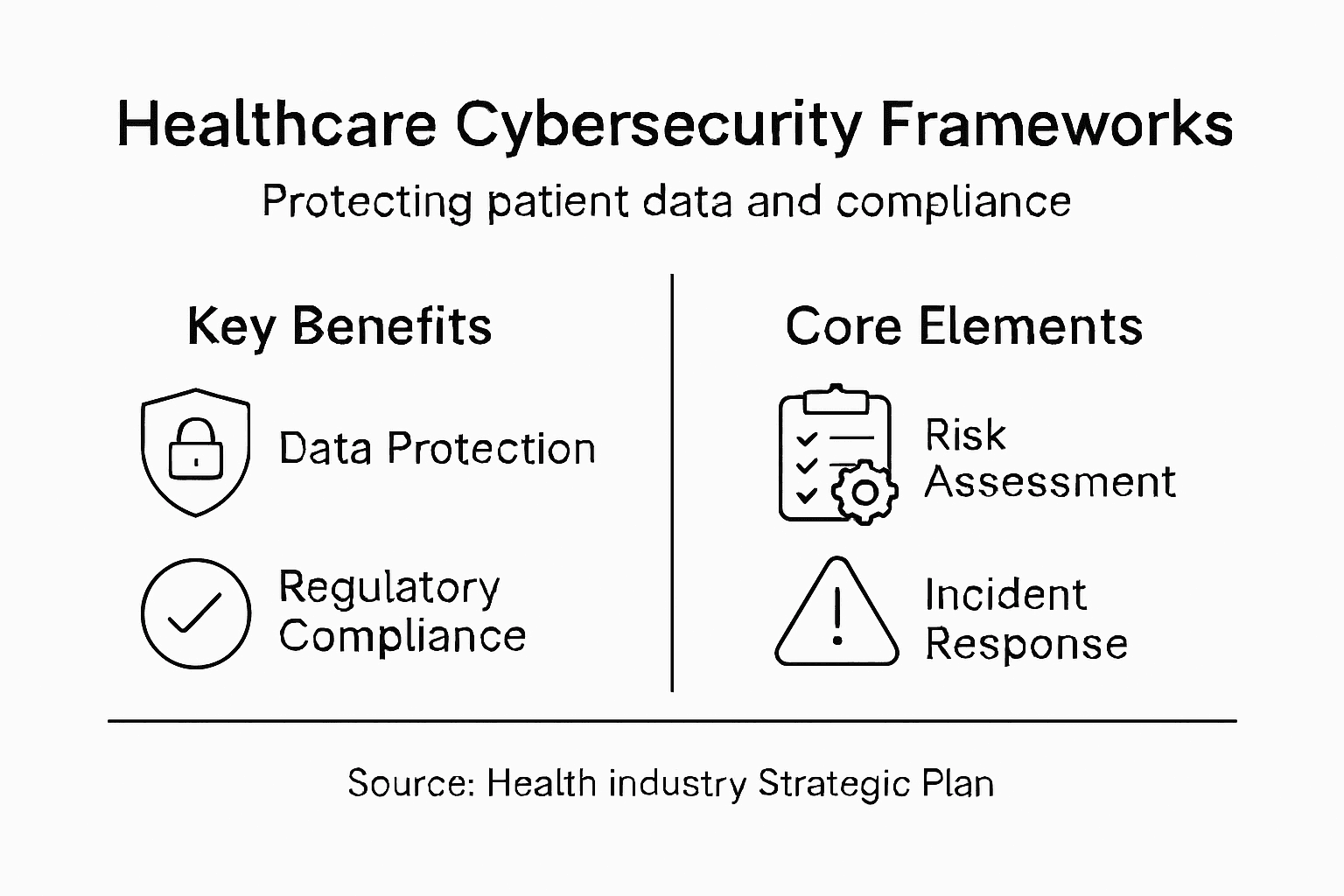
The Regulatory Adaptation Lifecycle represents a critical strategy for healthcare organizations to maintain compliance and operational resilience. This approach involves systematically monitoring legislative changes, assessing their potential impact on existing security protocols, and proactively updating administrative, physical, and technical safeguards. Key regulatory drivers include emerging federal guidelines like the Health Care Cybersecurity Improvement Act and updated HIPAA requirements that mandate more sophisticated electronic protected health information (ePHI) protection mechanisms.
Successful framework adaptation requires a multifaceted approach that integrates continuous monitoring, stakeholder collaboration, and agile governance structures. Healthcare organizations must develop flexible cybersecurity frameworks capable of quickly incorporating new regulatory requirements without disrupting critical patient care services. This involves creating cross-functional teams that can rapidly assess regulatory changes, implement necessary modifications, and ensure ongoing compliance with complex and evolving healthcare technology standards.
The most effective cybersecurity frameworks view regulatory compliance not as a static checklist, but as a dynamic process of continuous improvement. By maintaining a proactive and anticipatory approach to regulatory changes, healthcare institutions can transform compliance from a potential administrative burden into a strategic opportunity for enhancing technological resilience and patient trust.
Pro tip: Establish a dedicated regulatory tracking mechanism that provides monthly updates on potential cybersecurity legislative changes affecting healthcare organizations.
Strengthen Your Healthcare Cybersecurity with Proven Frameworks
Healthcare organizations face growing challenges protecting sensitive patient data while navigating complex regulatory demands and evolving cyber threats. The article highlights the critical importance of adopting comprehensive cybersecurity frameworks that integrate risk management, compliance, and business objectives to build resilient, adaptive defenses. If your institution struggles with aligning security protocols across IT, clinical, and legal teams or maintaining up-to-date compliance with frameworks like HIPAA and NIST, strategic expert guidance becomes essential.
At Heights Consulting Group, we specialize in transforming cybersecurity from a technical necessity into a strategic advantage. Our services include advisory on compliance frameworks, managed cybersecurity operations, and tailored incident response designed specifically for healthcare environments. We help you implement holistic frameworks that continuously monitor risks, improve governance, and integrate security seamlessly with your organizational goals.
Unlock the full benefits of healthcare cybersecurity frameworks today and protect your patient data with confidence.
Explore how our expertise can support your initiatives: Heights Consulting Group | Learn more about our strategic advisory services | Discover tailored compliance solutions
Take control of your healthcare cybersecurity strategy now and ensure your frameworks not only meet regulatory requirements but also empower your entire organization.
Secure your future today.
Are you ready to strengthen your healthcare cybersecurity framework and mitigate risk effectively?
Contact Heights Consulting Group at https://heightscg.com to begin your journey toward resilient, compliant, and business-aligned cybersecurity.
Frequently Asked Questions
What are cybersecurity frameworks in healthcare?
Cybersecurity frameworks in healthcare are structured approaches designed to protect sensitive medical information and technological infrastructure from cyber threats. They provide healthcare organizations with methodologies for identifying, assessing, and mitigating cybersecurity risks.
How do cybersecurity frameworks benefit patient data protection?
Cybersecurity frameworks benefit patient data protection by establishing specific safeguards that ensure the confidentiality, integrity, and availability of electronic protected health information (ePHI). This includes implementing robust security protocols to prevent unauthorized access and data breaches.
What role do compliance standards like HIPAA play in healthcare cybersecurity frameworks?
Compliance standards like HIPAA mandate specific security requirements that healthcare organizations must follow. They serve as a foundation for developing cybersecurity frameworks, ensuring that patient data is protected in accordance with legal regulations and best practices.
Why is it important to adapt cybersecurity frameworks to regulatory changes?
Adapting cybersecurity frameworks to regulatory changes is crucial to maintain compliance and protect against evolving cyber threats. This ensures that healthcare organizations can effectively safeguard patient information while meeting new legislative requirements.